
Wondering when your child should start preschool in Singapore? You’re not alone. With stages like playgroup, pre-nursery, N1, and K1, many parents feel unsure about the right preschool age to begin.
In Singapore, preschool age generally covers children from 18 months to 6 years, guiding them through early learning stages designed to nurture social, emotional, and cognitive development. This guide explains preschool ages, their purpose, and whether preschool is mandatory, helping you make informed decisions for your child’s early learning journey.
Preschool Stages in Singapore (18 months – 6 years)
Infant Care (2 – 18 months)
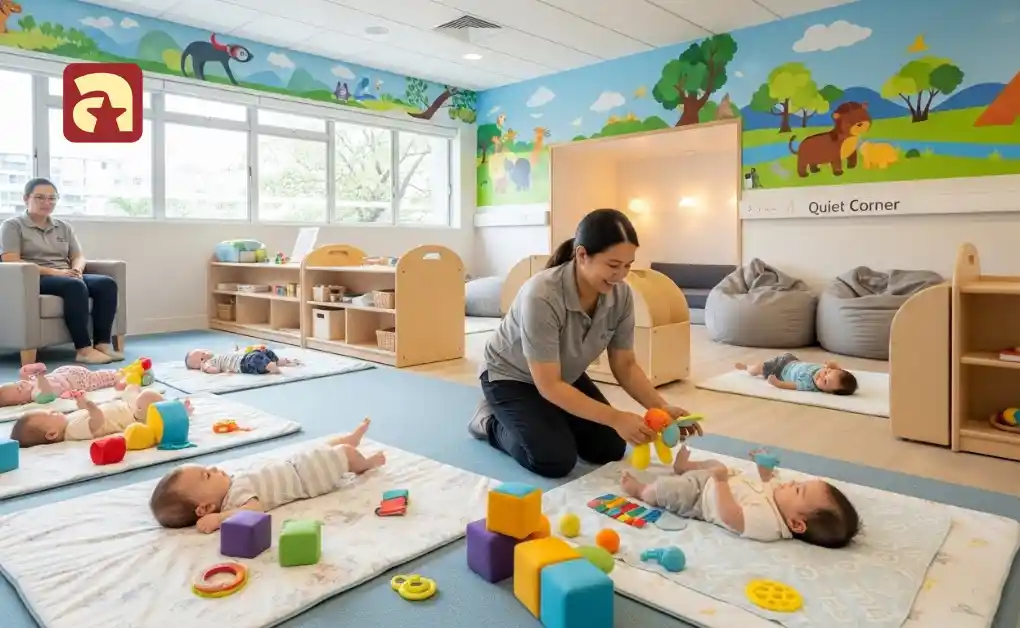
Infant care focuses on your baby’s early development, including feeding, sleep routines, motor skills, and sensory experiences. Caregivers support socialisation, emotional bonding, and early exploration to prepare infants for a smooth transition into playgroup or pre-nursery. According to ECDA guidelines in Singapore, infant care programmes are designed for children aged 2 to 18 months.
Playgroup & Pre-Nursery (18 months – 3 years)
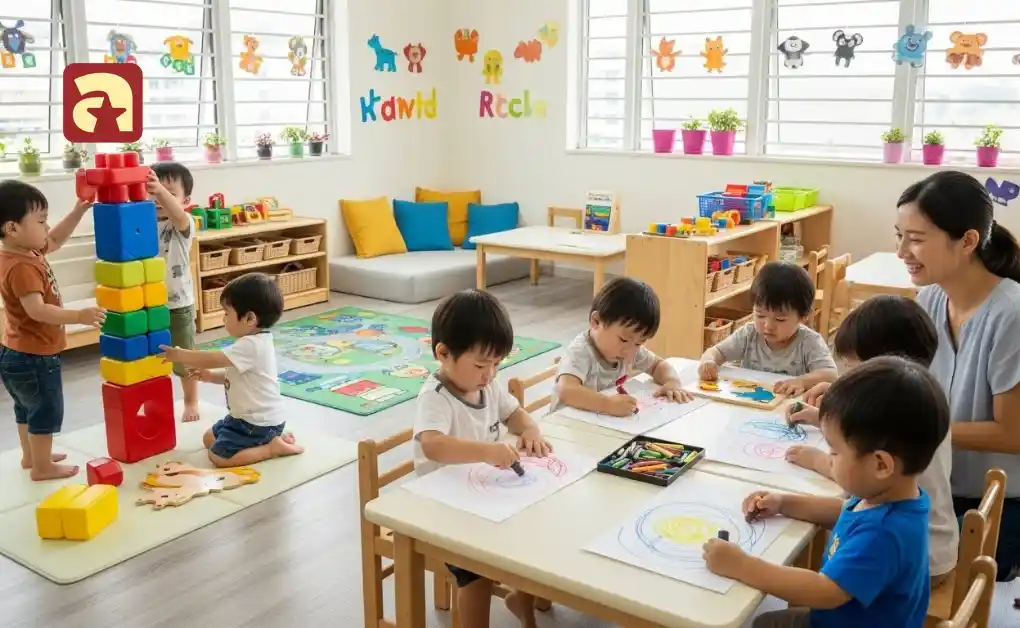
The early preschool age marks the start of your child’s learning journey. Toddlers learn best through sensory play, music, and movement. Group activities teach sharing and social skills, while routines like storytelling, sing-alongs, and motor exercises (stacking blocks, finger painting) help build confidence and communication. Teachers encourage exploration, fostering curiosity and independence.
Nursery 1 & Nursery 2 (N1 & N2, 3 – 5 years)
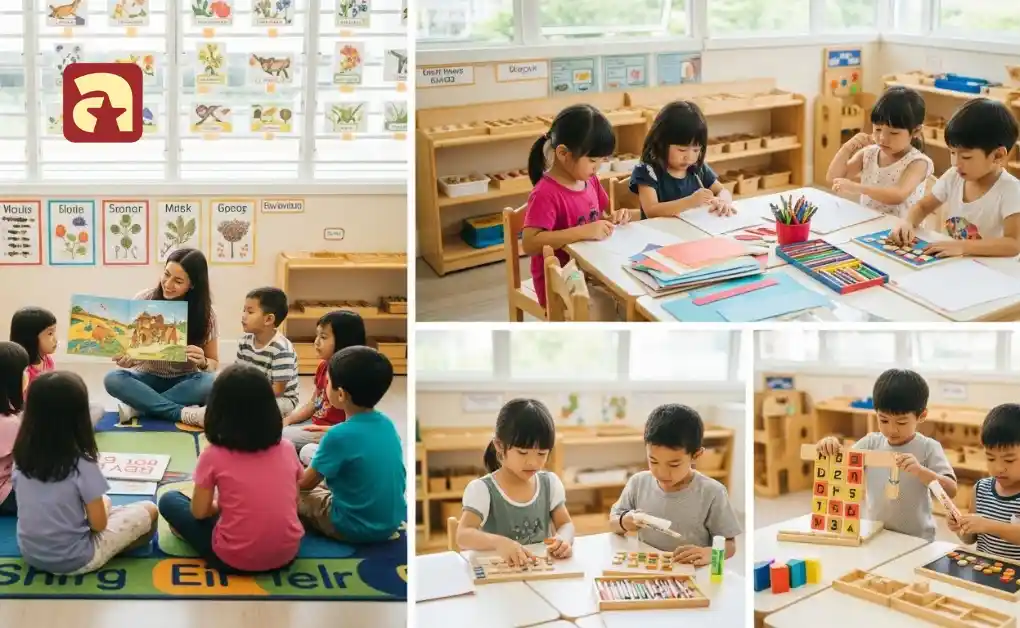
Children at this stage thrive on guided play and structured activities. They learn early literacy and numeracy, colours, counting, and phonics through games, stories, and art. Social skills, patience, empathy, and collaboration are strengthened through small group interactions and projects. Independence, problem-solving, and creativity are gradually developed, preparing them for more structured learning.
Kindergarten 1 & Kindergarten 2 (K1 & K2, 5 – 6 years)
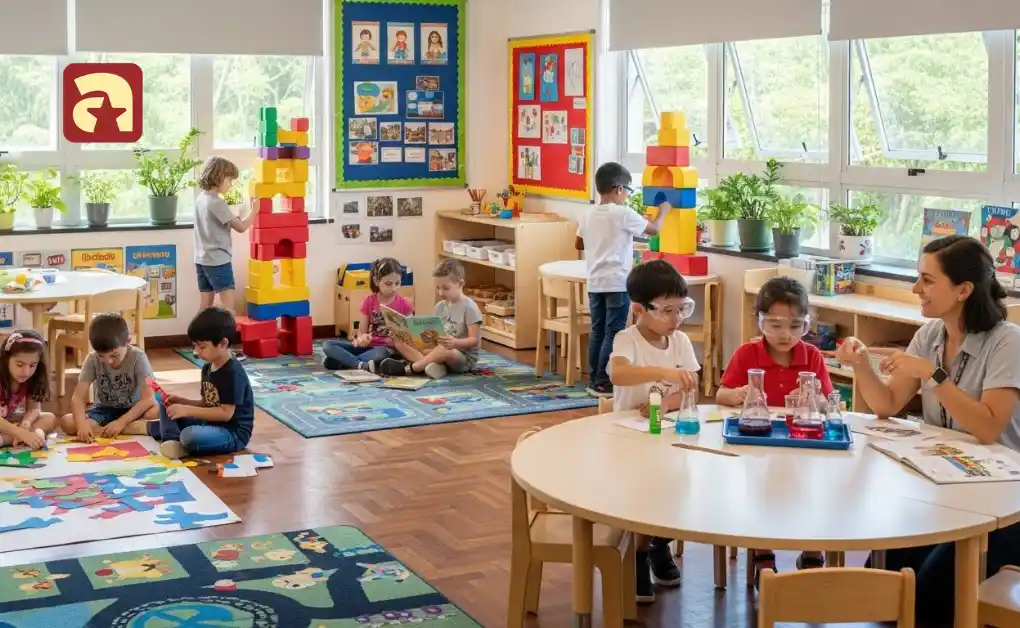
The final preschool years prepare children for Primary 1. K1 introduces literacy and numeracy basics, while K2 builds on these skills through projects, discussions, and creative exploration. Children gain confidence, social competence, and academic readiness, balancing learning with curiosity, creativity, and self-expression.
While age guidelines provide structure, every child develops at their own pace. The right preschool nurtures emotional, social, and cognitive growth, helping children enjoy learning confidently.
Is Preschool Compulsory in Singapore?
Preschool in Singapore is not mandatory. Formal education begins at age 7 with Primary 1, which is compulsory. However, many parents enrol their children in preschool to give them a head start in learning, social skills, and confidence.
Attending preschool can help children:
- Become familiar with classroom routines
- Develop early literacy, numeracy, and social skills
- Gain independence and self-confidence
Choosing the right preschool makes sure your child enjoys learning in a safe, nurturing environment without the pressure of academics.
Key Developmental Milestones During Preschool
Preschool children experience rapid growth across several areas:
- Cognitive Development: Recognising shapes, letters, numbers, and patterns, and developing problem-solving skills.
- Language and Communication: Expanding vocabulary, forming sentences, following stories, and practising listening and speaking.
- Social and Emotional Growth: Making friends, sharing, understanding emotions, building empathy, and gaining confidence.
- Physical Development: Improving gross motor skills (running, climbing) and fine motor skills (drawing, stacking, cutting), essential for everyday tasks.
A well-rounded preschool balances play, structure, and encouragement to support holistic development.
Signs Your Child Is Ready for Preschool
Readiness depends more on comfort, curiosity, and independence than on a strict age:
- Shows interest in other children and group play
- Follows simple instructions
- Expresses needs clearly
- Demonstrates basic independence in self-care
- Shows curiosity about new places
Every child develops at their own pace. The key is a nurturing environment where your child feels safe, excited, and confident.
Helping Your Child Adjust to Preschool
Starting preschool can be exciting and emotional. To ease the transition:
- Build routines early: Set regular schedules for meals, naps, and bedtime.
- Visit the school together: Familiarise your child with teachers and classrooms.
- Talk positively about school: Highlight fun activities and new friends.
- Encourage independence: Let children pack bags, dress, and tidy up.
- Stay calm and consistent: Confident goodbyes reassure your child.
With patience and encouragement, most children adapt quickly and enjoy their preschool journey.
Conclusion
The best age to start preschool in Singapore depends on your child’s readiness, not just their birthdate. From playgroup to K2, early education fosters confidence, creativity, and a love for learning. While preschool is not compulsory, choosing the right environment helps children thrive academically, socially, and emotionally.
Whether you live near Bukit Panjang, Yishun, or Choa Chu Kang, our preschool in Bukit Panjang, preschool in Yishun, and preschool in Choa Chu Kang programs provide nurturing environments that help children thrive academically, socially, and emotionally.
Supporting your child with patience, routine, and encouragement sets the stage for a positive, lifelong relationship with learning.
FAQs
1. Is it mandatory to go to nursery in Singapore?
No, preschool or nursery is not compulsory. Formal education begins with Primary 1 at age 7, which is mandatory. Many parents choose preschool to help children develop social skills, early literacy, and confidence.
2. How much does preschool cost in Singapore?
- MOE Kindergartens: ~S$160–180/month for Singapore citizens
- Private Preschools: ~S$800–2,000+/month
- Childcare Centres (full-day): ~S$700–2,500+/month, with subsidies available for eligible families
3. What are the 4 C’s of positive parenting?
The 4 C’s stand for Connection, Communication, Consistency, and Confidence. They help parents build strong emotional bonds, communicate effectively, maintain routines, and nurture a child’s self-esteem.
4. What age is best to start preschool in Singapore?
Most children start between 18 months and 3 years, depending on readiness. Signs of readiness include interest in other children, basic independence, curiosity, and the ability to follow simple instructions.
5. What are the benefits of sending a child to preschool early?
Early preschool experience helps children develop social skills, independence, early literacy and numeracy, and emotional confidence, giving them a strong foundation for Primary 1 and beyond.