
Okay, be honest. Has your toddler ever turned a plain white wall into their own little masterpiece? It happens more often than parents like to admit. Art activities for toddlers can get messy fast, but they don’t have to end in more cleanup than the fun was worth.
If you’re raising a little artist in a Singapore HDB flat and want ideas that are simple, easy to clean up, and use stuff you already have at home, you’re in the right place.
12 Fun Art Activities for Toddlers in Singapore
Here are 12 simple art activities for toddlers, grouped by how much mess they make and when they fit best.
4 Mess-Free Art Activities (Perfect for Small HDB Homes)
Living in a smaller home doesn’t mean arts and crafts for toddlers have to turn into a cleaning marathon. These four are made for tight spaces, quick cleanup, and parents who’d rather not find paint on the sofa three days later. All four work well for toddlers around 2 to 3 years old.
1. Bubble Wrap Painting
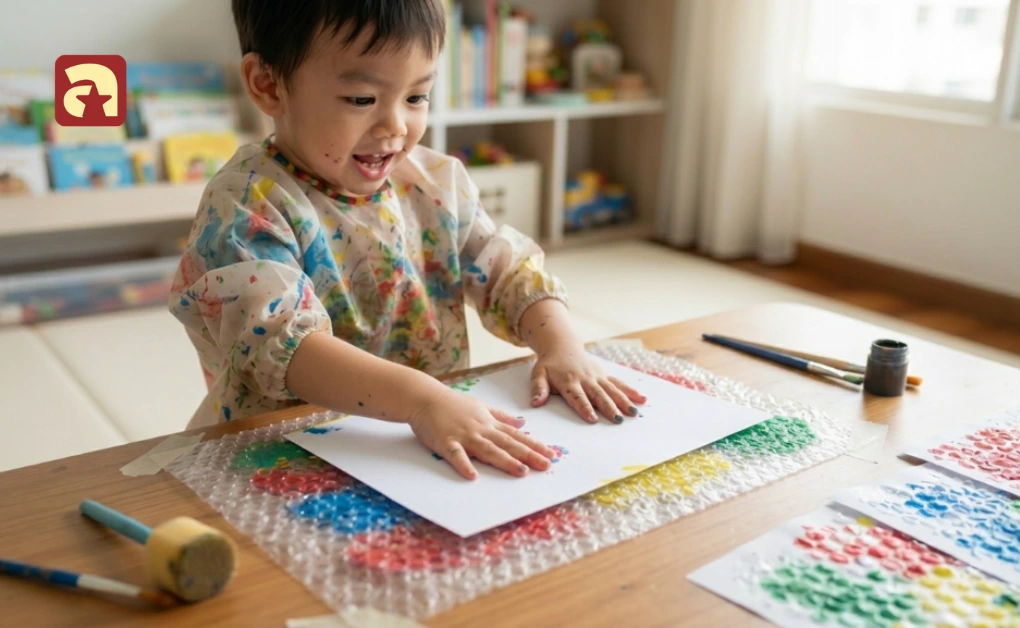
Toddlers this age love a good “reveal,” and this activity is built entirely around that moment. Pressing paper onto painted bubble wrap and peeling it back always gets a reaction, every single time.
What you’ll need: A sheet of bubble wrap, washable paint, paper, a paintbrush or sponge
How to do it:
- Tape the bubble wrap onto a table with the bumpy side facing up
- Let your toddler paint over the surface
- Press a sheet of paper on top, then peel it back slowly to reveal the pattern
2. Sticker Collage
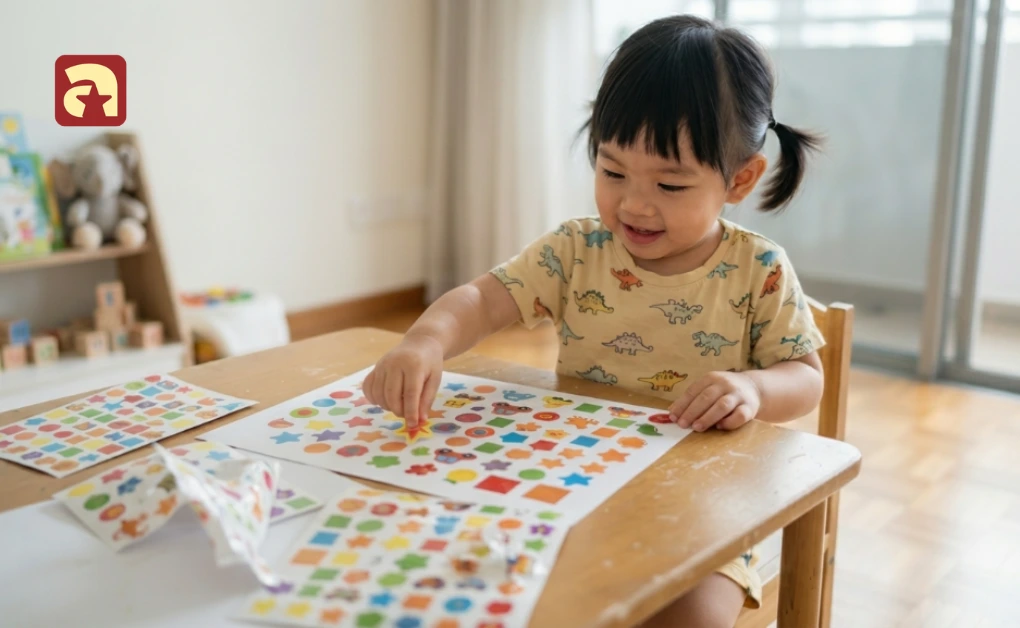
This one looks almost too simple, but that’s exactly why toddlers love it. Peeling and placing stickers takes more finger control than it seems from the outside, especially for a toddler still getting the hang of it.
What you’ll need: A sheet of paper, stickers in different shapes and colours
How to do it:
- Give your toddler a sheet of paper and a few sheets of stickers
- Let them peel the stickers off on their own
- Guide them gently as they place the stickers anywhere they like on the paper
3. Chalk Art at the Void Deck
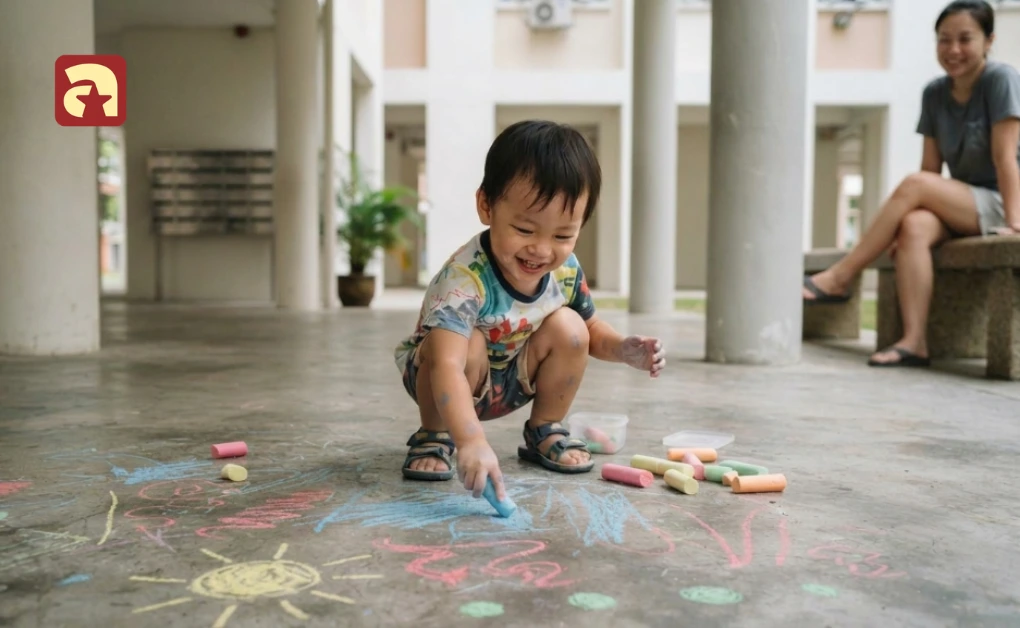
The best part about this one? It washes away with the next rain, so there’s truly nothing to scrub at home afterwards. It also gets your toddler outside, moving, and drawing on a much bigger “canvas” than paper allows.
What you’ll need: Chalk in a few colours, a clear patch of pavement
How to do it:
- Head down to the void deck or any clear pavement area
- Hand your toddler a few pieces of chalk
- Let them draw freely, lines, shapes, or scribbles all count
4. Playdough Stamping
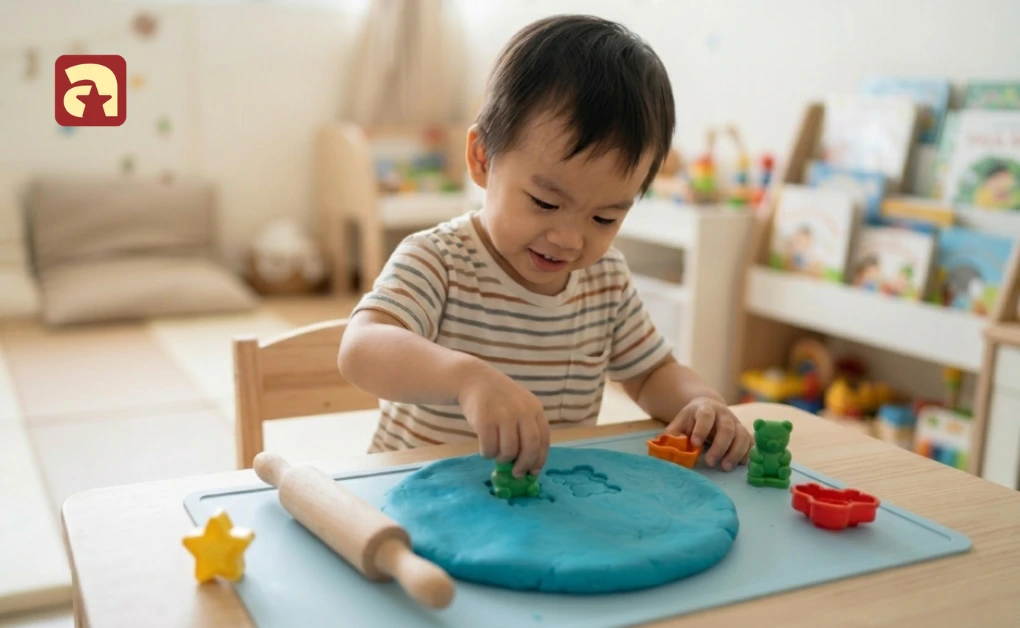
Quiet, contained, and genuinely mess-free, this is an easy one to reach for on a lazy afternoon. Pressing stamps or small toys into the dough keeps little hands busy, with little cleanup at the end.
What you’ll need: Playdough, small stamps or toy figures, a rolling pin (or a cup works fine too)
How to do it:
- Roll the playdough flat using a rolling pin or a cup
- Give your toddler a few stamps or small toy figures
- Let them press the stamps into the playdough to leave prints
4 Sensory Art Activities Toddlers Love
Toddlers learn so much just by touching things, and these painting for toddlers ideas let yours explore different textures while making something of their own. It’s a bit messier than the last section, but nothing you can’t handle with a mat and some old newspaper.
5. Rice or Pasta Painting
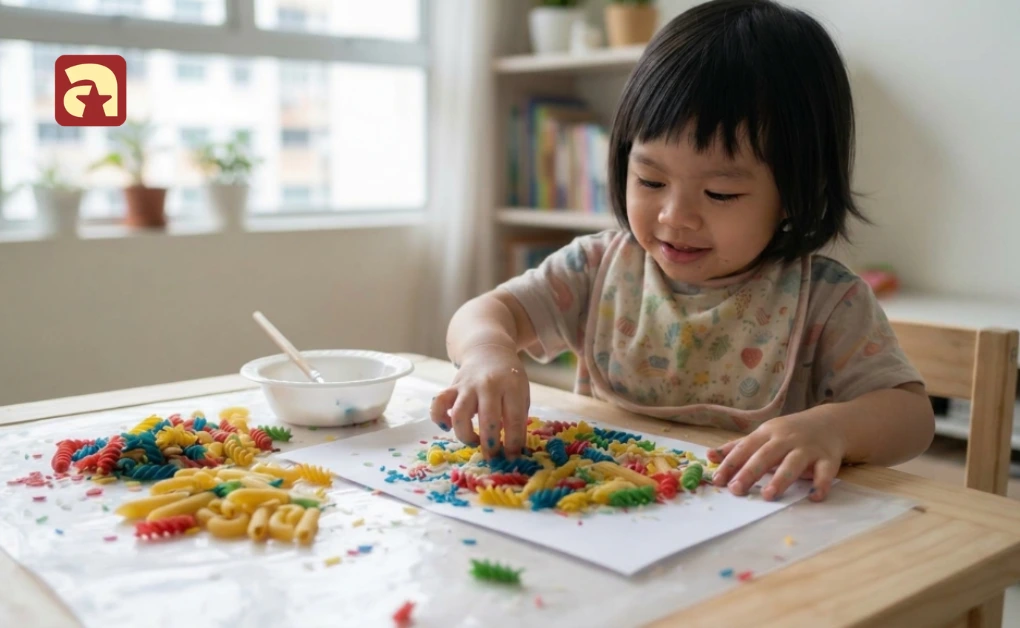
Around 1 to 2 years old, most toddlers are all about touching and exploring, not following instructions, so this one’s a natural fit. It also builds early sensory skills that help them make sense of the world around them. Fair warning, ours always end up eating a piece of dry pasta at some point. Totally harmless, just don’t be surprised.
What you’ll need: Dry rice or pasta, food colouring, glue, paper
How to do it:
- Colour the rice or pasta with a bit of food colouring and let it dry
- Once it’s dry, hand your toddler some glue and paper
- Let them stick the rice or pasta onto the paper however they like
6. Shaving Foam Art
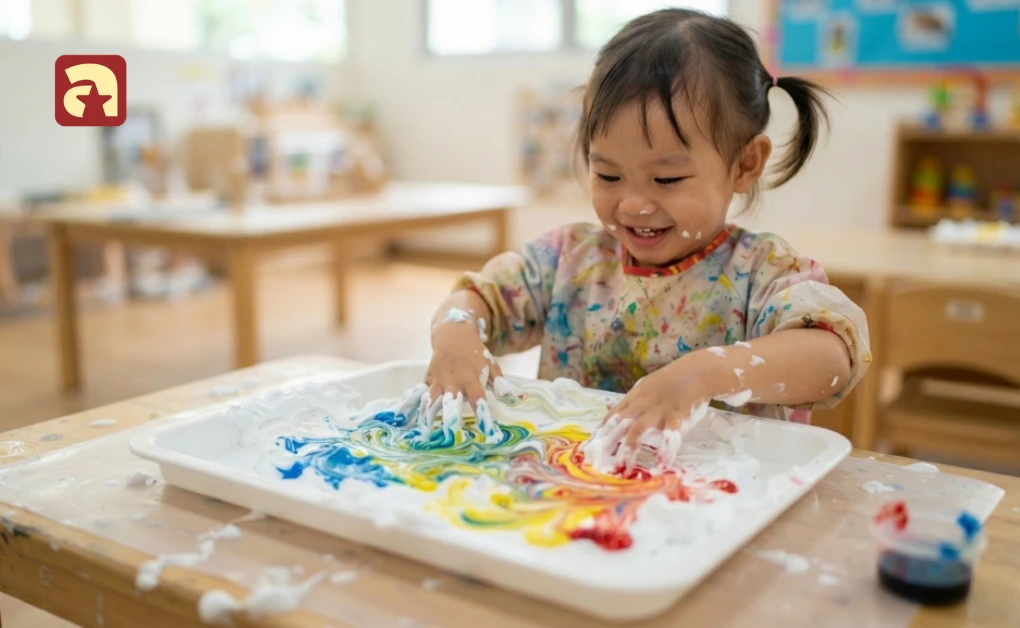
This is one we use a lot in our sensory corner at school. It’s gentle on little hands, easy to guide, and perfect for toddlers around 1 to 2 years old. Watching the colours swirl and mix also gives them a fun, calm way to notice cause and effect.
What you’ll need: Shaving foam, a tray or flat surface, food colouring (optional)
How to do it:
- Spread a layer of shaving foam onto a tray or flat surface
- Add a few drops of food colouring if you’d like
- Let your toddler swirl the foam around with their fingers
7. Finger Painting with Washable Paint
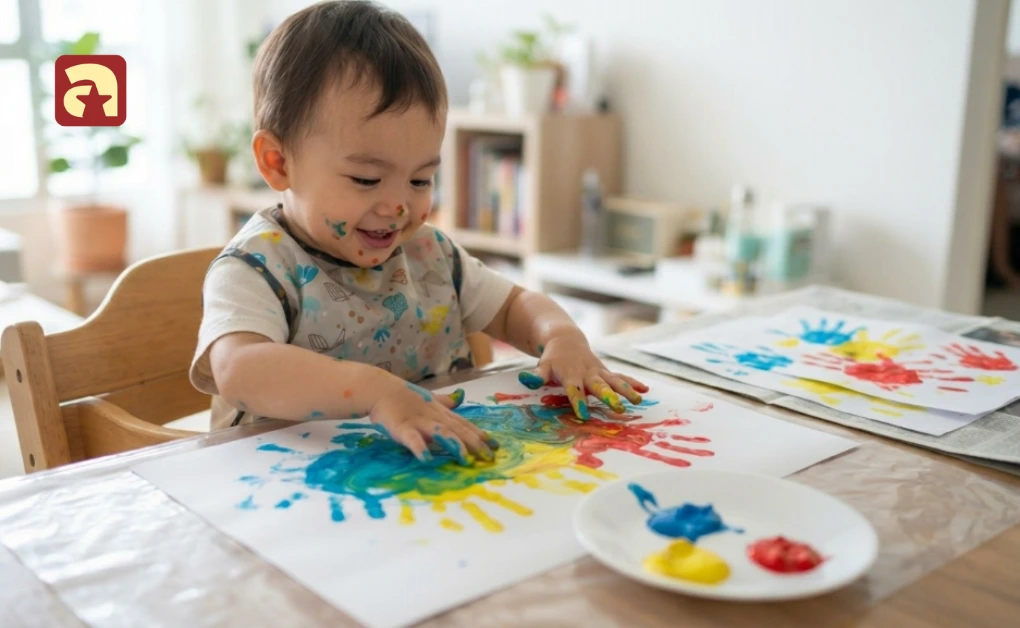
A true classic. Messy? A little. Worth it? Definitely. It works best around 1 to 2 years old, right when exploring freely matters more than making something neat, and it’s one of the easiest ways to build the finger control they’ll need later for holding a pencil.
What you’ll need: Washable paint, paper, a bib or old shirt
How to do it:
- Pour a small amount of paint onto a plate or tray
- Let your toddler dip their fingers into the paint
- Let them press and swipe their fingers across the paper however they want
8. Nature Collage with Leaves and Flowers
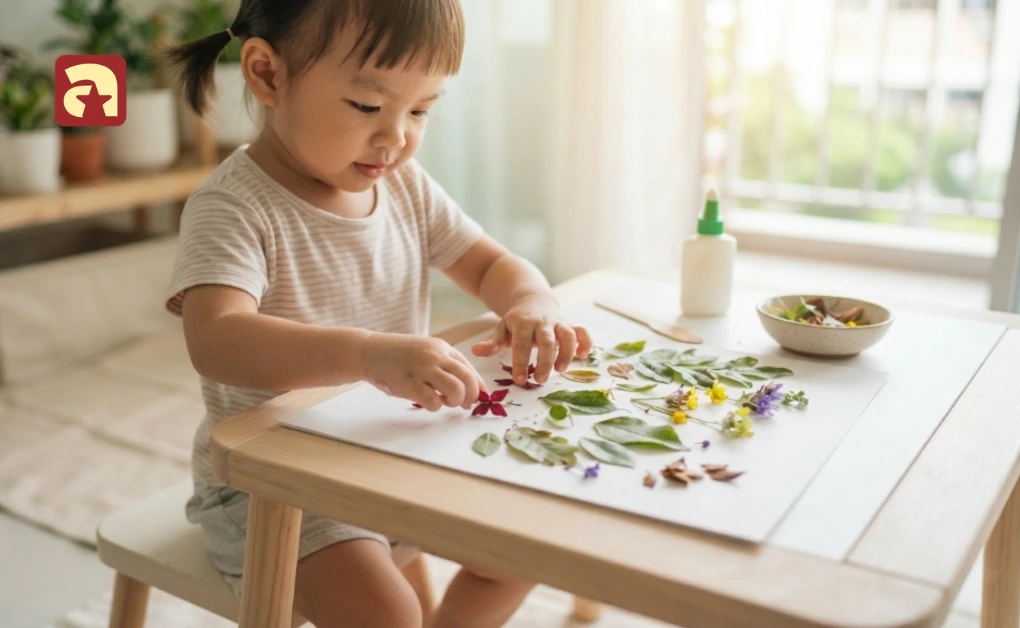
This one’s for slightly older toddlers, around 2 to 3 years, who can manage a short walk and a bit of glueing. It’s one of the first activities our teachers use to introduce shapes, colours, and the world outside, all through something as simple as picking up leaves on a walk. You can also turn it into a fuller outing with more things to do with toddlers in Singapore along the way.
What you’ll need: Leaves, flowers, or twigs collected from a park, glue, paper
How to do it:
- Take a short walk together and let your toddler pick out leaves, petals, or twigs
- Once you’re home, hand them some glue and a sheet of paper
- Let them arrange and stick their finds onto the paper to make a collage
4 Festive Art Activities (Great for Singapore’s Multicultural Calendar)
Singapore’s calendar is full of festivals, and each one is a lovely chance to bring simple crafts for toddlers into the celebration. National Day is another great opportunity to introduce children to Singapore through simple crafts and age-appropriate activities. These activities work well for toddlers around 2 to 3 years old, and a couple of them are simple enough for younger toddlers too with a little help.
9. Chinese New Year Lantern Craft
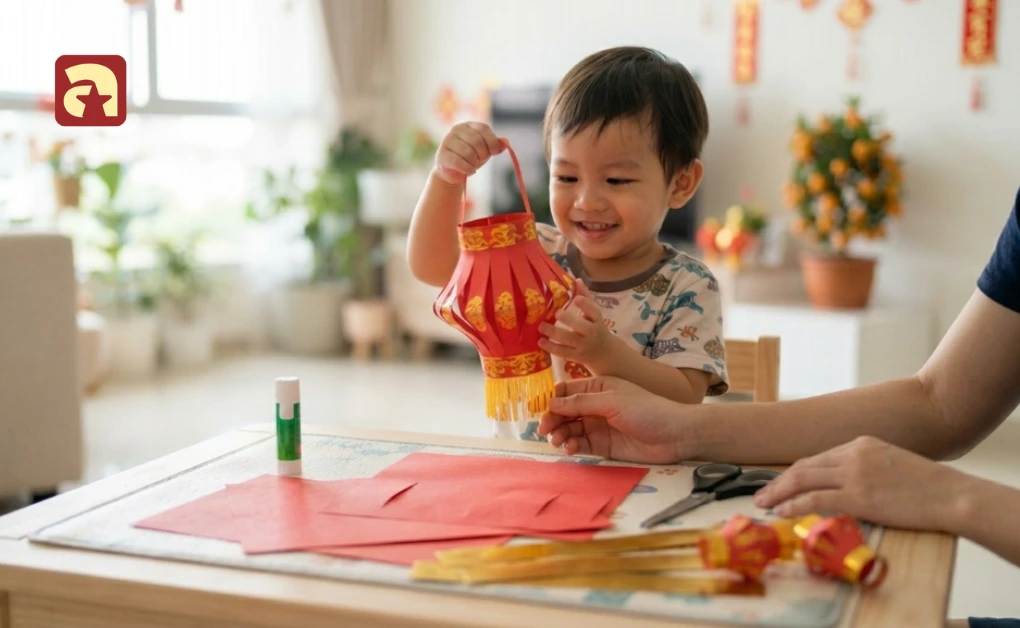
When Chinese New Year comes around, this is usually the first craft teachers pull out. Toddlers get to make their very own lantern, and watching them proudly show it off afterwards never gets old. It’s also a gentle way to introduce a tradition they’ll keep seeing every year growing up.
What you’ll need: Red paper, scissors (for adults to use), glue, a paper strip for the handle
How to do it:
- Fold a sheet of red paper in half lengthwise
- Cut slits along the folded edge, leaving the open edges uncut
- Unfold the paper, curl it into a cylinder shape, and glue the edges together
- Attach a paper strip on top as the handle
10. Deepavali Diya Painting
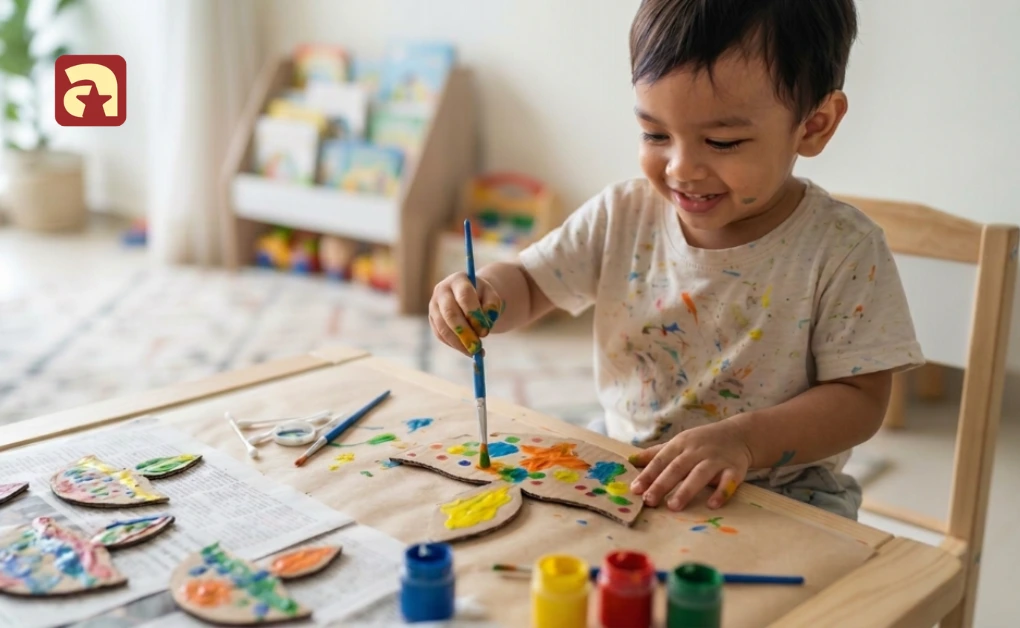
Deepavali is all about light, and this lets toddlers create their own little diya to join in the celebration. At this age, they’ll enjoy the decorating far more than getting it “right,” so let them go a little wild with colour here.
What you’ll need: Paper or cardboard cut into a diya shape, paint, cotton buds or a paintbrush
How to do it:
- Give your toddler a diya-shaped cutout
- Let them paint or dab colour onto it using a paintbrush or cotton bud
- Leave it to dry, then display it somewhere they can see it
11. Hari Raya Card Making
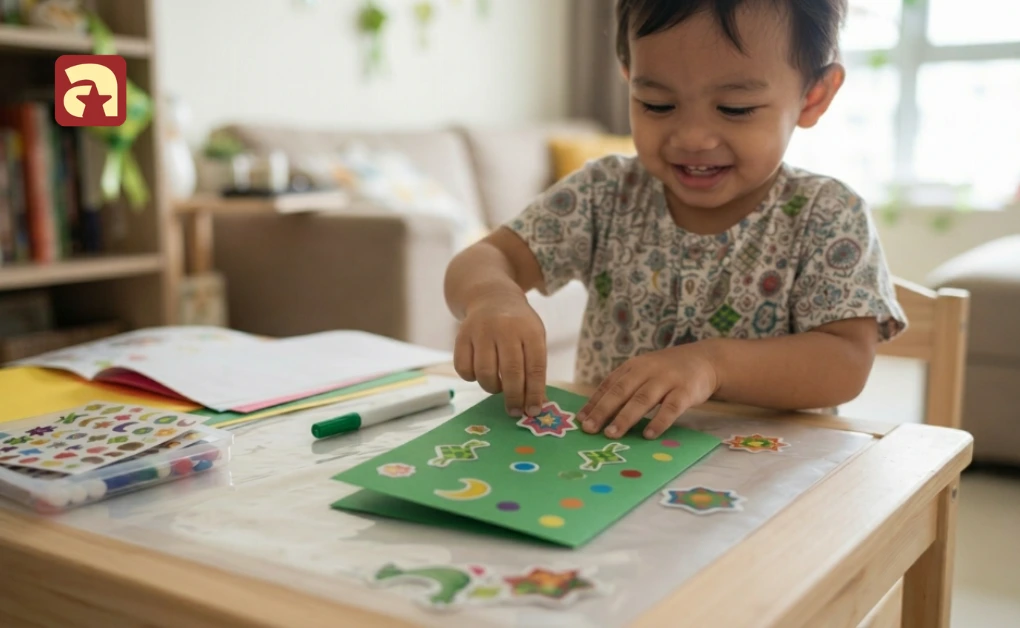
Simple, sweet, and something toddlers can actually give to someone. Making a card for Hari Raya teaches them a small but meaningful idea early on: that art can be a gift, not just something to keep for themselves.
What you’ll need: Green or colourful paper, stickers or stamps, a marker
How to do it:
- Fold a sheet of paper in half to make a card
- Let your toddler decorate the front with stickers, stamps, or simple marks
- Help them “sign” the card, even if it’s just a scribble
12. Christmas Handprint Tree
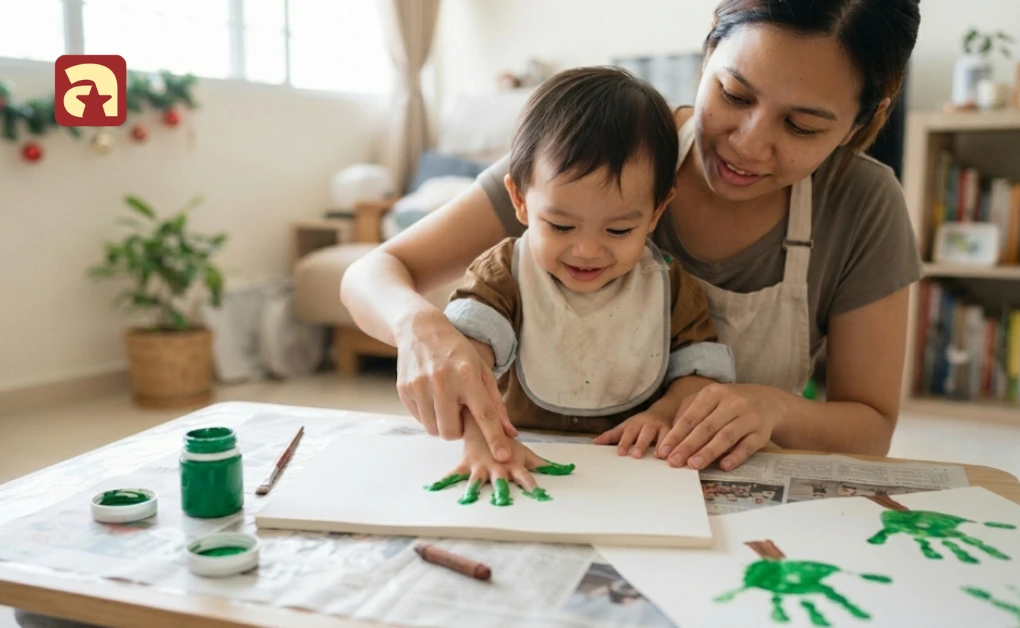
A classic that works beautifully even for younger toddlers, from about 1 to 3 years old, since it’s mostly guided by an adult. Turning a handprint into a Christmas tree is one of those crafts parents tend to keep for years, a small marker of how tiny their hands once were.
What you’ll need: Green paint, paper, a brown marker or crayon
How to do it:
- Paint your toddler’s palm and fingers green
- Press their hand onto paper to form the shape of a tree
- Once dry, draw a small trunk underneath using a brown marker or crayon
Tips for Parents: Making Art Time Stress-Free
You don’t need a big setup to make toddler art work at home. A few small habits go a long way in keeping things calm, fun, and easy to clean up after.
- Set up a small “art corner.” It doesn’t need to be fancy, just a mat, a box of supplies, and a spot your toddler knows is theirs for creating.
- Keep old newspapers or a plastic mat handy. Lay it down before you start, and cleanup becomes a two-minute job instead of a twenty-minute one.
- Let go of getting it just right. Your toddler isn’t trying to impress anyone, and that’s the whole point. The scribbles and smudges are exactly what this age is about.
- Turn cleanup into part of the game. Toddlers love helping when it feels like play. Hand them a wet wipe and make it the “last activity” of the session.
Art is just one way to encourage creativity and independence. For more hands-on ideas to try, Montessori activities for toddlers at home in Singapore follow the same everyday learning-through-play approach.
How Montessori Preschools Use Art to Support Learning
Art is a consistent part of everyday learning, not something reserved for occasional activities. It’s even something Singapore’s own early childhood guidelines point to directly. The Nurturing Early Learners Framework lists creative expression as one of the key parts of a good preschool education. At Amazing Star, a trusted preschool in Singapore, these principles are woven into everyday classroom experiences, where art supports practical life skills, independence, and hands-on learning alongside the rest of your toddler’s development.
- It supports language and communication. Talking about colours, shapes, and what they’ve made helps toddlers build vocabulary without even realising it.
- It connects to early math concepts. Sorting, counting, and comparing sizes often sneak into art activities without feeling like “lessons” at all.
- It builds independence and focus. Much like how a Montessori child works at their own personal mat, art gives toddlers a small space and task that’s entirely their own to complete.
If you’re choosing a preschool for your toddler, it’s worth asking how art fits into their daily routine, as part of how children are taught to think and express themselves every day.
Conclusion
Toddlers don’t need much to enjoy art, just a little time, some everyday materials, and the freedom to create in their own way. Whether it’s a quick mess-free activity, sensory play, or a festive craft, each one helps build focus, confidence, and a bit of independence along the way.
Amazing Star brings that same spirit of exploration into real classroom moments, from painted handprints to Deepavali diya art and Chinese New Year lantern crafts. Families can experience this firsthand at centres in Bukit Panjang, Choa Chu Kang, Yishun, and Serangoon, each offering a nurturing space where toddlers can grow with confidence.
FAQs
Is finger painting safe for toddlers?
Yes, as long as you use paint labelled as non-toxic and washable. It’s still worth keeping an eye on younger toddlers who tend to put their fingers in their mouths. If it happens, there’s usually no cause for concern with non-toxic paint, just rinse their hands and mouth with water afterwards.
Is it normal for toddlers to eat or taste art supplies?
Yes, this is common, especially with younger toddlers who explore everything with their mouths. Always choose non-toxic, child-safe materials, and stay close by during art time just in case.
What if my toddler refuses to do art activities?
Some toddlers just need time to warm up to something new, and that’s completely normal. Try joining in yourself first, or turn it into a game rather than a task, like painting alongside them instead of asking them to paint. Keep sessions short, and don’t push it if they’re not feeling it that day. Most toddlers come around after a few relaxed tries.
How often should toddlers do art activities?
Two to three short sessions a week is a good starting point, around 10 to 15 minutes at a time. Toddlers benefit more from regular, brief bursts of creative play than long sessions, since their attention spans are still developing at this age.
What are the best non-toxic art supplies for toddlers in Singapore?
Look for materials that are safe for little hands and easy to wash off skin, clothes, and surfaces. These are widely available at places like Popular and Daiso, and most children’s art supplies sold in Singapore meet these safety standards.