
Have you ever watched a toddler zoom across the room like a tiny race car, or a baby stretch every little arm and leg just to grab a toy? Kids are built to move, and all that crawling, jumping, and running isn’t just adorable, it’s how they get stronger, steadier, and more confident every day.
Living in Singapore can make active play a bit tricky. Small HDB flats, busy school days, and the hot, humid weather sometimes slow things down. But you don’t need a huge backyard or fancy gear. With a little creativity and a few fun activities at home, in a Singapore preschool, at the playground, or in the park, your child can get moving, explore, and even surprise themselves with what they can do.
In this article, you’ll learn what gross motor skills are, why they matter, and 10 fun activities that turn playtime into a full-on adventure of strength, balance, and confidence.
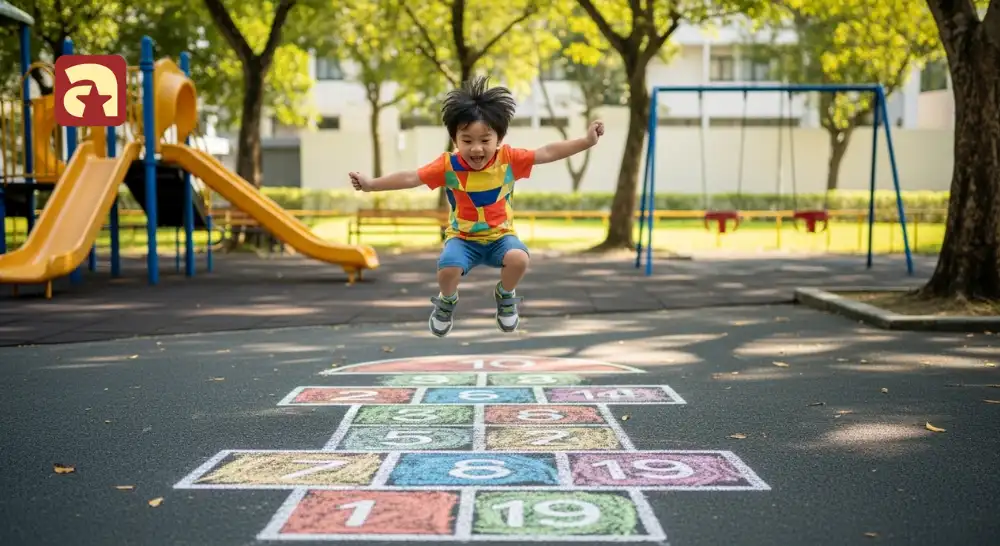 Best for: 2–6 years
Jumping and hopping look like simple play, but they are actually excellent gross motor skills activities. Each time a child hops on one foot or jumps over a crack, they strengthen their legs and improve their balance and coordination in ways that benefit them for many years.
How to do it:
Best for: 2–6 years
Jumping and hopping look like simple play, but they are actually excellent gross motor skills activities. Each time a child hops on one foot or jumps over a crack, they strengthen their legs and improve their balance and coordination in ways that benefit them for many years.
How to do it:
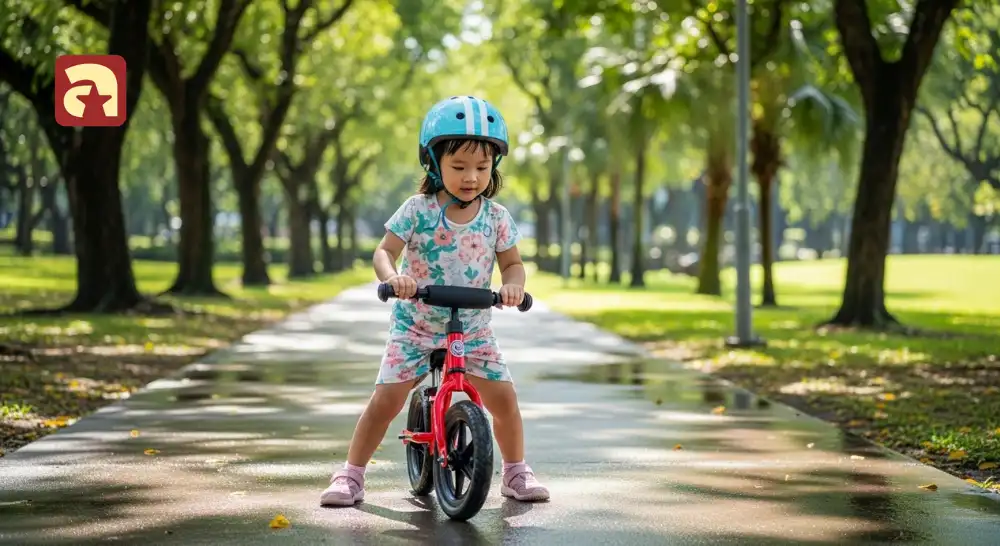 Best for: 3–8 years
Few things beat the look on a child’s face when they realise they are actually riding a bike on their own. This kind of play is a great way to encourage outdoor education while developing balance and coordination.
How to do it:
Best for: 3–8 years
Few things beat the look on a child’s face when they realise they are actually riding a bike on their own. This kind of play is a great way to encourage outdoor education while developing balance and coordination.
How to do it:
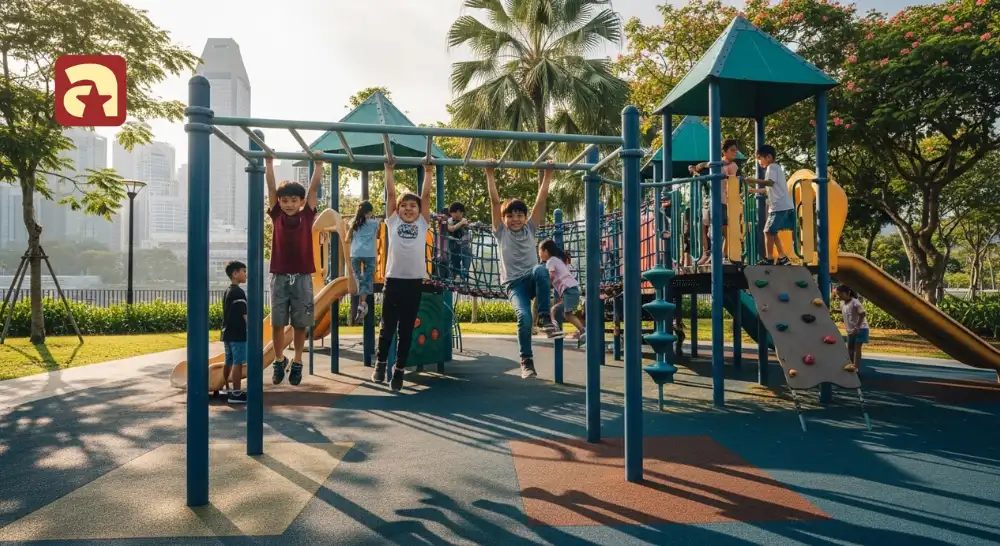 Best for: 2–7 years
Playgrounds are not just places to kill time; they are actually incredible gross motor skills gyms in disguise. Climbing frames, monkey bars, rope ladders, and swings all build upper body strength, grip, agility, and spatial confidence in ways that are hard to replicate indoors.
How to do it:
Best for: 2–7 years
Playgrounds are not just places to kill time; they are actually incredible gross motor skills gyms in disguise. Climbing frames, monkey bars, rope ladders, and swings all build upper body strength, grip, agility, and spatial confidence in ways that are hard to replicate indoors.
How to do it:
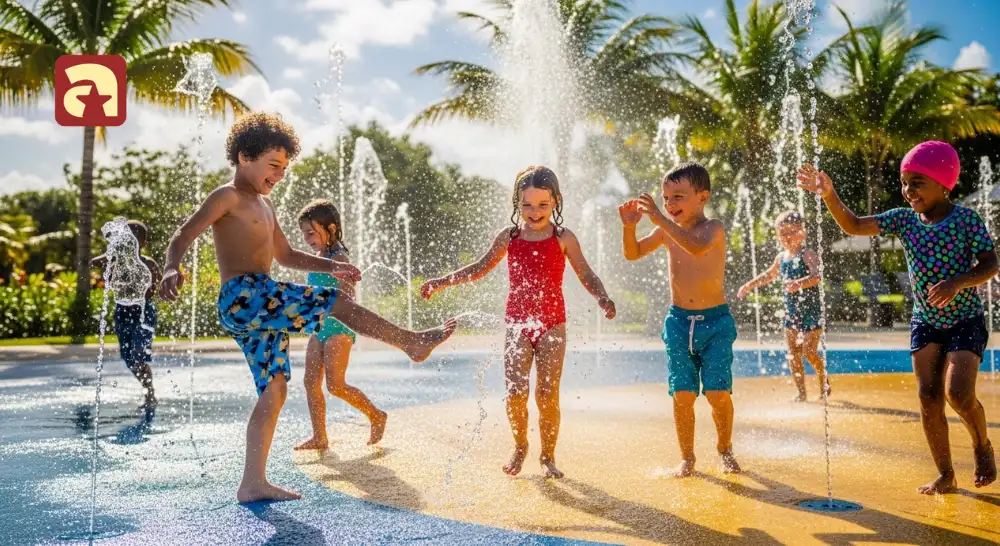 Best for: 1–8 years
Water play is a perfect fit for Singapore’s tropical heat and is also one of the most comprehensive gross motor skills activities you can find. Kicking, paddling, splashing, and floating all engage the whole body, build coordination, and are genuinely joyful for children of almost any age.
How to do it:
Best for: 1–8 years
Water play is a perfect fit for Singapore’s tropical heat and is also one of the most comprehensive gross motor skills activities you can find. Kicking, paddling, splashing, and floating all engage the whole body, build coordination, and are genuinely joyful for children of almost any age.
How to do it:
 Best for: 2–8 years
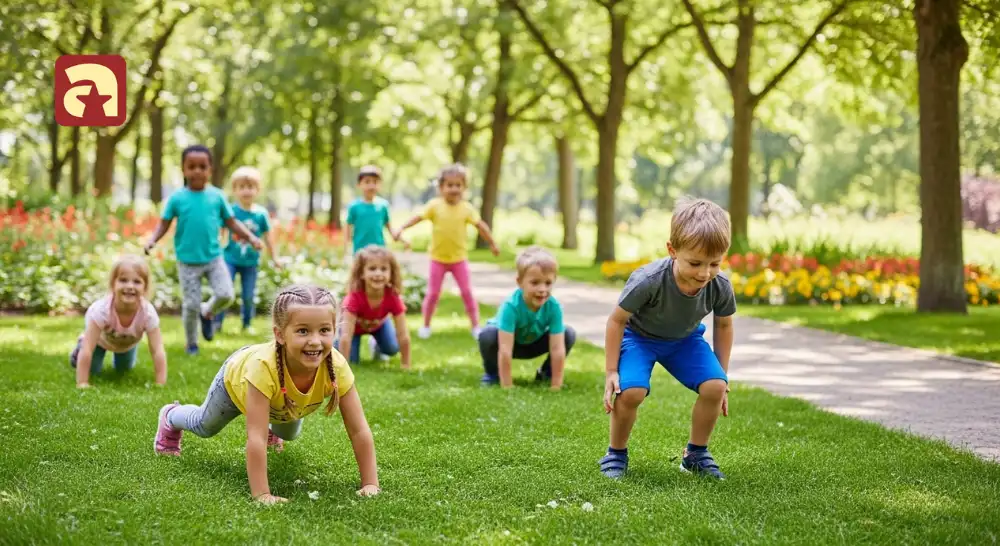
This one is a favourite for a reason. Tell a toddler to “walk like a bear” and watch what happens. Animal walks are brilliant gross motor activities for toddlers; they are playful, imaginative, and genuinely effective at building strength and flexibility without feeling like exercise at all.
How to do it:
Best for: 2–8 years
This one is a favourite for a reason. Tell a toddler to “walk like a bear” and watch what happens. Animal walks are brilliant gross motor activities for toddlers; they are playful, imaginative, and genuinely effective at building strength and flexibility without feeling like exercise at all.
How to do it:
What Are Gross Motor Skills and Why Do They Matter?
Gross motor skills are movements that use the whole body, like crawling, running, jumping, climbing, and balancing. These skills are essential because they help children develop strength, coordination, and balance, which make everyday activities easier and safer. Children who develop strong gross motor skills tend to do better in school and other activities because they can focus more, move confidently, and participate fully. These skills also boost confidence and lay the foundation for sports, active play, and lifelong movement. From a newborn’s first tummy time to a six-year-old chasing a ball at the park, everyday play is how these skills grow.10 Essential Gross Motor Skills Activities
1. Tummy Time: Building Strength from the Start
Best for: 0–6 months Tummy time sounds simple, and it is, but it is one of the most important gross motor skills activities you can do with a newborn. When your baby lies on their tummy, they have to lift their head, push up with their arms, and work muscles they will use for rolling, crawling, and eventually walking. How to do it:- Lay your baby on a soft mat or blanket a few times each day. Start with just 2–5 minutes at a time.
- Get down on the floor with them. Make eye contact, smile, sing a little song, your face is the best toy you have.
- Place a colourful toy just out of reach to encourage them to stretch and lift.
- As your baby gets stronger, gradually increase the time.
2. Obstacle Course Adventure: Fun Challenges for Toddlers
Best for: 1–5 years Want to keep a toddler busy for an entire afternoon? Build them an obstacle course. Crawling under cushions, hopping over soft toys, walking along a taped line on the floor, these are some of the best gross motor activities for toddlers because they work so many skills at once, like balance, coordination, strength, and problem-solving. How to do it:- At home, use whatever you have, like sofa cushions to crawl under, chairs to zigzag between, and pillows to jump over. These are similar to Montessori activities for toddlers that encourage creativity and gross motor skill development.
- Use masking tape to mark out paths or targets on the floor.
- At an HDB playground, use natural features such as ramps, steps, low walls, and open spaces, all of which work well.
- Let your child design their own course. They love having some control.
- Celebrate every try, not just the fastest or the best one.
3. Jump, Hop, and Skip Games: Strengthen Legs and Coordination
Best for: 2–6 years
Jumping and hopping look like simple play, but they are actually excellent gross motor skills activities. Each time a child hops on one foot or jumps over a crack, they strengthen their legs and improve their balance and coordination in ways that benefit them for many years.
How to do it:
- Draw a hopscotch grid with chalk outside your block or at the park.
- Use tape on the floor at home to make lines for jumping along or across.
- Play “the floor is lava”, use cushions or floor markers as safe islands.
- Encourage hopping on one foot, jumping backwards, or skipping with a jump rope.
- Keep sessions short and cheerful. Ten minutes of enthusiastic jumping beats an hour of reluctant exercise every time.
4. Ball Play: Catch, Kick, and Throw
Best for: 2–8 years A ball and an open space, that is honestly all you need for one of the best gross motor skills activities around. Rolling, catching, kicking, and throwing all build hand-eye coordination, timing, spatial awareness, and teamwork. And kids absolutely love it. How to do it:- Start with young children rolling a soft ball back and forth on the floor.
- Move on to gentle underarm throwing and catching as they get steadier.
- Set up simple targets, like a plastic bucket, a chalk circle, or a gap between two shoes, for kicking practice.
- Gradually introduce mini-football games or simple team games at the park.
- Try sepak takraw-style kicking challenges for a fun local twist!
5. Cycling and Balance Bikes: Ride with Confidence
Best for: 3–8 years
Few things beat the look on a child’s face when they realise they are actually riding a bike on their own. This kind of play is a great way to encourage outdoor education while developing balance and coordination.
How to do it:
- Start with a balance bike (no pedals) so your child learns to balance first. This makes it much easier to move to a pedal bike later.
- Let them move and glide at their own pace; do not rush it.
- When they feel comfortable balancing, you can introduce a pedal bike while an adult stays close to help.
- Great spots in Singapore: East Coast Park, Bishan-Ang Mo Kio Park, and quiet neighbourhood paths are all excellent choices.
6. Dancing and Movement Sessions: Coordination Through Music
Best for: 2–8 years Turn up a fun song and just let your child go for it. Dancing is one of those gross motor skills activities that does not feel like exercise at all, and that is exactly what makes it so effective. Jumping, twirling, stepping, and swaying all develop coordination and rhythm without your child even realising they are “working out.” How to do it:- Put on upbeat music and encourage your child to copy you, or better yet, let them lead.
- Mix it up by adding jumps, spins, stomps, and freeze-dance moments.
- You can also find kids’ dance videos online to follow along, especially on rainy days.
- Check out local children’s dance classes at community centres for something more structured.
- Even ten minutes of silly dancing at home counts as a proper gross motor activity.
7. Climbing and Swinging: Upper Body Strength and Agility
Best for: 2–7 years
Playgrounds are not just places to kill time; they are actually incredible gross motor skills gyms in disguise. Climbing frames, monkey bars, rope ladders, and swings all build upper body strength, grip, agility, and spatial confidence in ways that are hard to replicate indoors.
How to do it:
- Head to the nearest playground and let your child explore freely.
- Encourage them to try the monkey bars (even if they can only manage one rung at first!).
- Swinging independently builds core strength help them learn to pump their legs.
- Stay close to guide and support, but let them try it on their own.
- East Coast Park and Bishan-Ang Mo Kio Park have excellent age-appropriate equipment worth checking out.
8. Water Play and Swimming: Full-Body Coordination
Best for: 1–8 years
Water play is a perfect fit for Singapore’s tropical heat and is also one of the most comprehensive gross motor skills activities you can find. Kicking, paddling, splashing, and floating all engage the whole body, build coordination, and are genuinely joyful for children of almost any age.
How to do it:
- Start simple: a baby pool, a void-deck splash pad, or even a tub of water at home works for little ones.
- Encourage kicking, splashing, floating, and reaching for toys in the water.
- Progress to proper swimming lessons when your child is ready. Many community pools offer good programmes.
- Always supervise closely near water, no exceptions.
- Use floaties and swim toys to make early water experiences fun and confidence-building.
9. Martial Arts and Kid-Friendly Sports: Discipline and Control
Best for: 3–8 years Once children are around three years old, beginner sports and martial arts programmes become a brilliant way to develop gross motor skills with a bit more structure. Taekwondo, gymnastics, and football, these are not just about learning moves. They teach children focus, body control, coordination, and how to work with others. How to do it:- Look for beginner or “mini” classes designed specifically for young children.
- Focus on programmes that emphasise fun and confidence-building rather than competition.
- Many community centres across Singapore offer affordable, short-term programmes, a great low-commitment way to try something new.
- Even one session per week can make a noticeable difference in coordination and self-confidence over time.
10. Animal Walks and Nature Adventures: Creative Movement Outdoors
Best for: 2–8 years
This one is a favourite for a reason. Tell a toddler to “walk like a bear” and watch what happens. Animal walks are brilliant gross motor activities for toddlers; they are playful, imaginative, and genuinely effective at building strength and flexibility without feeling like exercise at all.
How to do it:
- Bear crawl: hands and feet on the ground, bottom in the air. Works the whole body.
- Frog hop: squat low, jump forward with both feet. Great for leg strength.
- Crab walk: hands and feet on the ground, belly facing up. Builds core and arm strength.
- Combine these with outdoor adventures, hop between tree stumps, balance along a low wall, and crawl through a tunnel at the park.
- Singapore has great spots for this: MacRitchie Reservoir, Gardens by the Bay, and Labrador Park are all wonderful options.
Safety Tips for Parents
Fun activities are always better when everyone stays safe. Here are a few things to keep in mind:- Supervision: Always watch babies and toddlers during tummy time, water play, or climbing. Never leave them unattended.
- Safe surfaces: Use soft mats and padded floors indoors. Check playground equipment for loose parts or sharp edges before your child uses it.
- Protective gear: Always have your child wear protective gear, helmets for cycling, knee pads for beginners, and floaties for water play. This is a must.
- Right challenge level: Make sure the activity is appropriate for your child’s current stage. A stretch is good, but a struggle that ends in tears is not.
- Clear the space: Remove sharp objects, slippery rugs, or anything that could cause a tumble before indoor play.
- Hydration and rest: Singapore’s heat is real. Bring water, take breaks, and do outdoor activities in the morning or evening when it is cooler.