
If your child is getting ready for preschool, you might already be wondering how to help them feel more confident. But the moment you try to “teach” something, attention disappears in minutes, and they are off doing something else. That is completely normal.
Preschoolers do not learn through sitting still, worksheets, or structured lessons. At this age, learning happens in movement, conversation, play, and repetition in daily life. That is something many parents realise early, especially when preparing children for preschool in Singapore.
So instead of forcing learning, the better approach is simple: bring language into everyday moments. A song in the car, a short chat during dinner, or spotting letters on a sign are all small but powerful ways to build early reading skills without pressure.
This guide covers 10 language and literacy activities for preschoolers that fit naturally into daily life and help build early reading confidence step by step.
10 Best Language and Literacy Activities for Preschoolers
Language development at the preschool stage grows best through simple, everyday interactions. These activities for preschool help children build strong early reading foundations through play-based learning, conversation, and real-life experiences.
1. Read-Aloud Story Time
Reading aloud is one of the strongest ways to improve early literacy skills. At this age, children learn best when stories feel interactive, not passive. A simple bedtime story can become a powerful learning moment.
What you can do:
- Read short picture books daily
- Pause and ask simple questions like “What do you think will happen next?”
- Let your child point at pictures and name what they see
- Repeat interesting words together
Why it works:
Stories help children connect words with meaning. When they respond or predict, they are actively building comprehension instead of just listening.
A small habit that helps a lot:
After finishing, ask “What was your favourite part?” It helps children remember and express ideas.
2. Everyday Talk Activities
Language development does not only happen during learning time. It grows naturally through the way you talk during normal daily routines. Even simple conversations shape vocabulary over time.
What you can do:
- Talk during meals, walks, or shopping
- Describe what you are doing: “I am cutting soft green cucumbers.”
- Ask open questions like “What should we do next?”
Why it works:
Children learn vocabulary faster when they hear words in real situations. Every day talk builds understanding naturally without effort.
3. Songs, Rhymes & Sound Play
Before children can read, they need to understand how sounds work inside words. Music and rhythm make this learning feel fun and effortless instead of structured.
What you can do:
- Sing nursery rhymes with actions
- Pause and let your child complete the last word
- Play simple sound games like rhyming words
Why it works:
Rhythm and repetition help children notice how words are built, building early phonological awareness for reading.
If you want to understand how this fits into a broader learning approach, the Montessori Preschool Guide for Singapore parents explains how language develops through play and real-world experiences.
4. Letter Hunt Games at Home
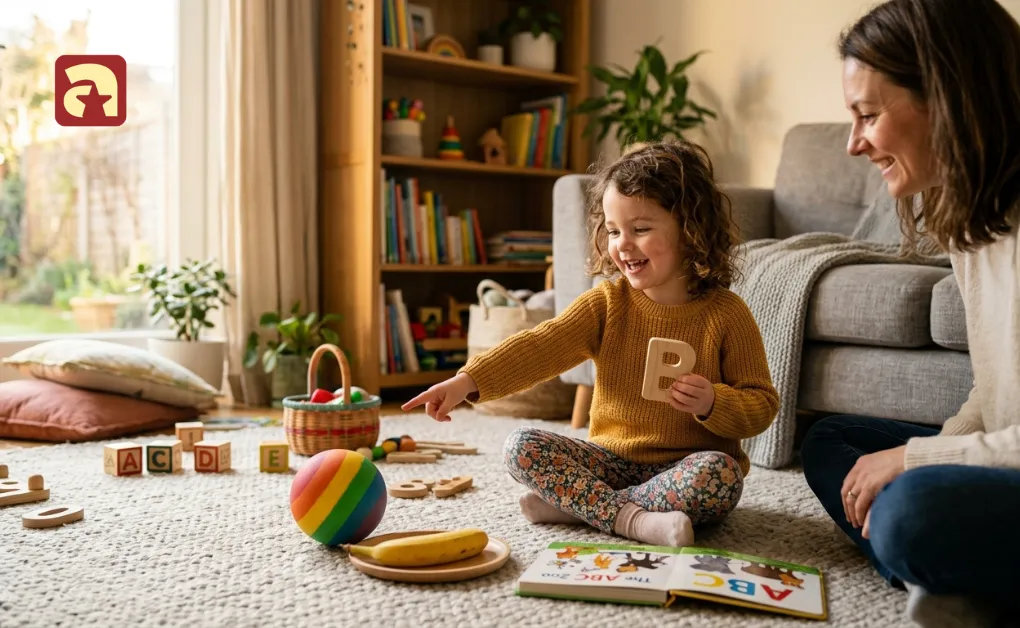
Letters are easier to learn when children see them as part of their everyday environment. Turning learning into a game keeps them curious and engaged.
What you can do:
- Pick one letter and find objects that start with it (B = ball, book, banana)
- Focus on sounds, not just letter names
- Use toys, food, or everyday objects
Why it works:
Children learn better when they connect sounds to real things instead of memorising letters in isolation. This is exactly what hands-on learning looks like in practice, curious, active, and rooted in real experience.
5. Storytelling & Talking About the Day
Children build strong thinking skills when they talk about real experiences. It helps them organise thoughts and express ideas clearly.
What you can do:
- Ask “What was the best part of your day?”
- Help them explain with prompts like “Who were you with?”
- Take turns making up simple stories
Why it works:
Speaking in full sentences and ordering ideas properly is an important early skill for children. With regular practice, they become more confident and clear in both speaking and writing. This can be further supported through simple problem-solving activities for preschoolers in everyday situations.
6. Pretend Play Conversations
Play is one of the most natural ways children learn communication skills. When they are pretending, they speak more freely without pressure.
What you can do:
- Roleplay real-life situations like shops, doctors, or MRT rides
- Let your child lead the conversation
- Switch roles to keep it fun
Why it works:
Pretend play helps children practice real conversations in a safe and fun way. It builds confidence, improves speaking skills, and helps them express ideas more clearly in everyday situations.
At our preschool in Choa Chu Kang and preschool Bukit Panjang, pretend play and roleplay activities are a regular part of how children build communication confidence in the classroom.
7. Drawing & Scribbling Activities
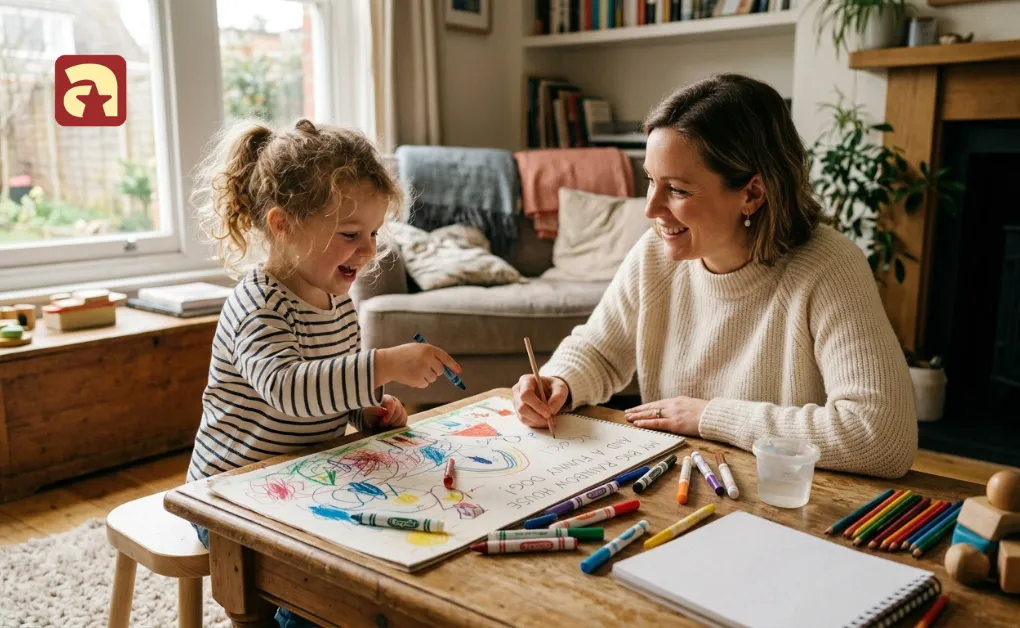
Writing begins long before letters are formed correctly. It starts with expressing ideas through drawings and marks on paper.
What you can do:
- Let your child draw freely without correction
- Ask them to explain their drawing
- Write their words under the drawing
Why it works:
Children start understanding that spoken words can turn into written language, which is a key reading foundation. Encouraging open-ended art activities at this stage helps preschoolers express themselves creatively and build early writing confidence.
8. Reading the World Around You
Reading becomes meaningful when children realise it exists everywhere, not just in books or classrooms.
What you can do:
- Read signs, labels, and menus together
- Point out letters on buses or MRT stations
- Ask them to spot familiar letters outside
Why it works:
It helps children understand that reading is part of everyday life. This builds awareness, curiosity, and early recognition of words in real-world situations.
9. Word & Sound Games
Sound awareness plays a key role in early reading development. Games make this skill easier to build without pressure.
What you can do:
- Play rhyming games (cat–hat–bat)
- Ask “What starts with the same sound?”
- Break simple words into sounds
Why it works:
These games help children understand phonics in a fun and natural way.
10. Question & Thinking Games
Questions are a simple way to help children think more deeply and express their ideas clearly. When they are encouraged to explain their thoughts, they become more confident in speaking and communicating. This also inherently supports their early language development.
What you can do:
- Ask “why” and “how” questions in daily life
- Give simple choices: “What should we do first?”
- Encourage full sentence answers
Why it works:
It helps children think in a more organised way and explain their ideas clearly. This improves their reasoning skills and builds confidence in speaking. For parents looking to go further, STEM activities for preschoolers offer another great way to strengthen these thinking and problem-solving skills through play.
Signs Your Child’s Language Skills Are Growing
Language development doesn’t happen overnight, it grows slowly through everyday moments. But as your child learns and practices, you’ll start noticing small yet meaningful changes in how they speak and understand language.
- They start using new words naturally in daily conversations
- They ask more questions out of curiosity
- They speak in longer, more complete sentences
- They begin to describe events in the correct order
- They notice and recognise words in books, signs, and their surroundings
These small but steady improvements show that your child’s language skills are developing in a healthy and positive direction.
Conclusion
Early reading skills do not come from pressure or structured lessons. They develop through small, consistent moments in everyday life.
Talking during routines, reading short stories, playing simple games, and noticing words in the environment all help children build strong language foundations in a natural, stress-free way. The goal is not to do more, but to do small things regularly. Over time, these everyday interactions and preschool reading activities support early literacy and help children grow into confident readers.
If you are looking for a preschool that brings these principles to life every day, Amazing Star Montessori has centres across Singapore. Visit our preschool in Yishun to learn more about how we support your child’s early learning journey.
FAQs
1. How much time should I spend daily?
Around 10–20 minutes a day is enough for language activities. It works best when spread out in small moments instead of one long session. Simple daily interactions are more effective than formal teaching time.
2. Is screen time helpful for language learning?
Screen time can help children recognise new words, but it should be limited. Real conversations, storytelling, and interaction build stronger language skills. Children learn best when they actively speak and respond.
3. Will learning two languages confuse my child?
No, learning two languages does not confuse children. In fact, they are naturally capable of picking up multiple languages. With regular exposure, bilingual learning can be very beneficial.
4. What kind of books are best?
Simple picture books with clear images work best for preschoolers. Repetitive words and short sentences help them understand easily. Books that encourage interaction are especially useful.
5. When will my child start reading independently?
Every child develops at their own pace, so there is no fixed age. Focus on building interest in words and stories first. Independent reading usually develops naturally over time.