
Your child is staring at a puzzle piece, turning it around, trying every angle. It doesn’t fit. Their little brow furrows. Then click. That face lights up like they just discovered something incredible.
Problem-solving isn’t built through flashcards or assessment books. It’s built through play, through mess, through the five minutes you resist jumping in when the block tower keeps falling.
The tricky part is knowing how to make that happen in real life, especially when you’re juggling work, school runs, and a child who’d rather watch YouTube than stack cups.
This guide covers ten hands-on problem-solving activities for preschoolers in Singapore built around everyday life at home and school, no special equipment needed, plus practical advice on supporting your child without doing all the thinking for them. Whether your child is two or five, there is something here worth trying today.
10 Fun Problem-Solving Activities for Preschoolers
You don’t need to spend a single cent on new toys. Most of these use things already sitting in your kitchen drawer or toy bin. Pick one, try it this weekend, and see what happens.
1. Building and Construction Challenges
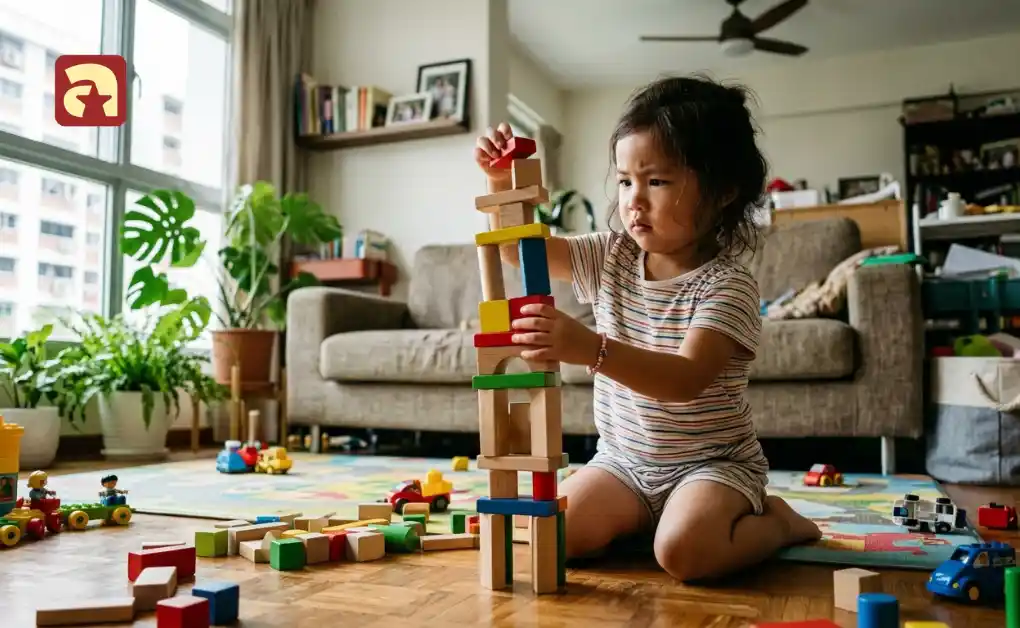
Give a child a box of blocks, and they’ll play. Give them a mission, and suddenly they’re thinking. When the tower falls or the bridge collapses, watch what happens next. That pause before they try again is where the real learning is.
What you need
- LEGO bricks, wooden blocks, or recycled boxes and cartons
- A small toy to use as a prop, like a toy car or figurine
- Any flat surface to build on
How to play
Give your child a simple challenge instead of letting them build freely. Try something like “Can you make a bridge strong enough for this toy car?” or “Build the tallest tower using only six blocks.” Then step back. When it falls, resist jumping in. Let them work out what went wrong on their own.
2. Puzzle Play with Everyday Objects
You don’t need to buy a single puzzle for this. Tupperware lids, egg cartons, and small household objects work just as well. Sometimes better, because they feel like real things rather than toys.
What you need
- Tupperware containers and lids
- Egg cartons
- Small objects to sort, like buttons, coins, or pegs
How to play
Ask your child to match lids to the right containers or sort small objects into egg carton slots by colour or size. When something doesn’t fit, don’t fix it for them. Let them notice, figure out why, and try a different way. Getting it wrong the first time is fine. That’s the whole point.
3. Sorting and Classifying Games
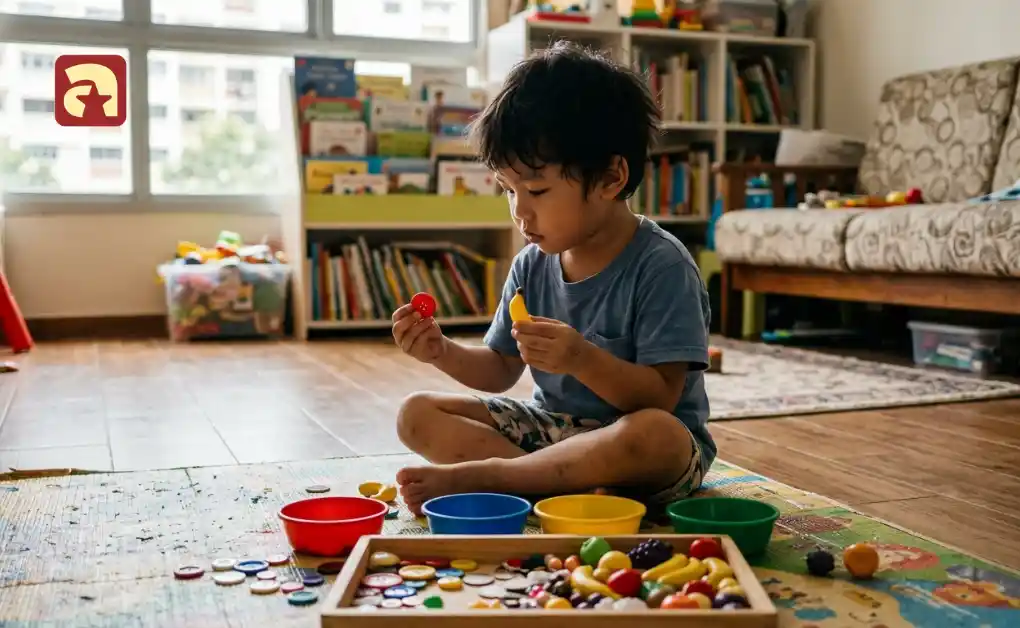
This one looks almost too easy until you watch a three-year-old genuinely wrestle with whether a tomato belongs with the red things or the round things. There is no wrong answer, and honestly, that is what makes it such a good thinking practice.
What you need
- Fruits, vegetables, or groceries from your last NTUC run
- Toys, buttons, or small household objects
- Bowls or trays to sort into
How to play
Ask your child to group things by colour, size, shape, or type. Don’t tell them which rule to use. Let them pick. When they finish, ask why they sorted it that way. Then try again using a different rule. The same objects, sorted three different ways, is three times the thinking.
4. Story-Based “What Would You Do?” Scenarios
No materials, no setup, no clean-up. Just a made-up situation and a child who almost certainly has stronger opinions about it than you expect. This one works just as well in the car, at the dinner table, or right before bed.
What you need
- Nothing at all
How to play
Make up a simple problem and ask your child to solve it. “Oh no, Teddy fell into the river and can’t swim. What do we do?” or “The toy bus broke down, and we need to get to school. How?” Keep it playful and let them lead. If your child is more comfortable in Mandarin, run the whole thing in Mandarin. The language doesn’t matter as long as they are thinking it through.
Storytelling activities like these encourage children to explain their reasoning, expand their vocabulary, and strengthen early communication skills. You can also pair them with other language and literacy activities for preschoolers at home.
5. Water Play with a Mission
Most children would happily splash around in water for an hour without any encouragement. The trick is giving that splashing a purpose without making it feel like a lesson. A simple challenge is all it takes, and suddenly they are measuring, planning, and adjusting without even realising it.
What you need
- Plastic cups and bowls in different sizes
- A basin or tray to contain the mess
- Water
How to play
Set a specific task before they start. “Can you move all the water from this big bowl into these three cups without spilling?” or “Fill this bottle using only the smallest cup.” When they spill or get stuck, ask what they think went wrong rather than showing them. Let them work through it and try a different approach on their own.
6. Simple Cooking and Kitchen Tasks
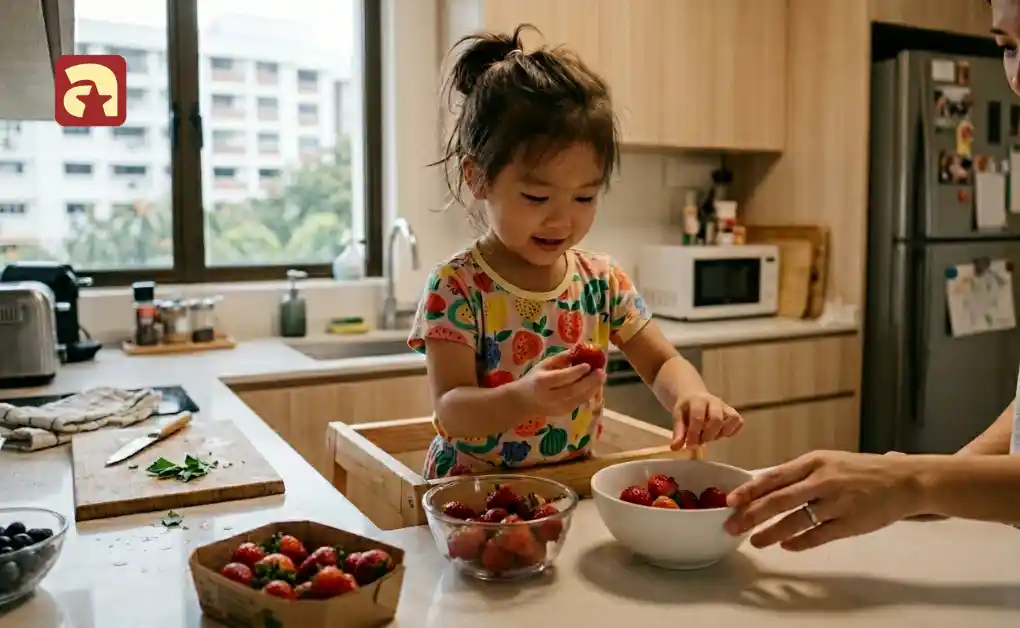
Most children want to be in the kitchen anyway. The pulling at your sleeve, the standing on tiptoes to see what’s happening on the counter. Giving them a small job with a real decision attached turns all that curiosity into something genuinely useful.
What you need
- Whatever you are already making, sandwiches, fruit, simple snacks
- Safe utensils appropriate for their age
- A step stool, if needed
How to play
Pull your child in and give them a job that requires some thinking. “We need six strawberries, can you count them out?” or “The sandwich keeps falling apart, how do we fix it?” Let them figure it out before stepping in. Even if the result is a little messy, the thinking they did to get there is worth it.
7. Treasure Hunt and Simple Map Reading
This one takes about five minutes to set up and will keep your child busy far longer than you expect. There is something about a mission with a map that makes children incredibly focused. The same child who couldn’t sit still for ten minutes will happily spend thirty minutes working out where X marks the spot.
What you need
- A piece of paper and a crayon
- Small treats or toys to hide
- Your home or a nearby outdoor space
How to play
Draw a simple map of your home together and mark where you have hidden something. Let your child navigate to it using the map. Start with one or two rooms and make it more complex as they get the hang of it. Once they have found it a few times, swap roles and let them hide something and draw the map for you.
8. Mini Science Experiments
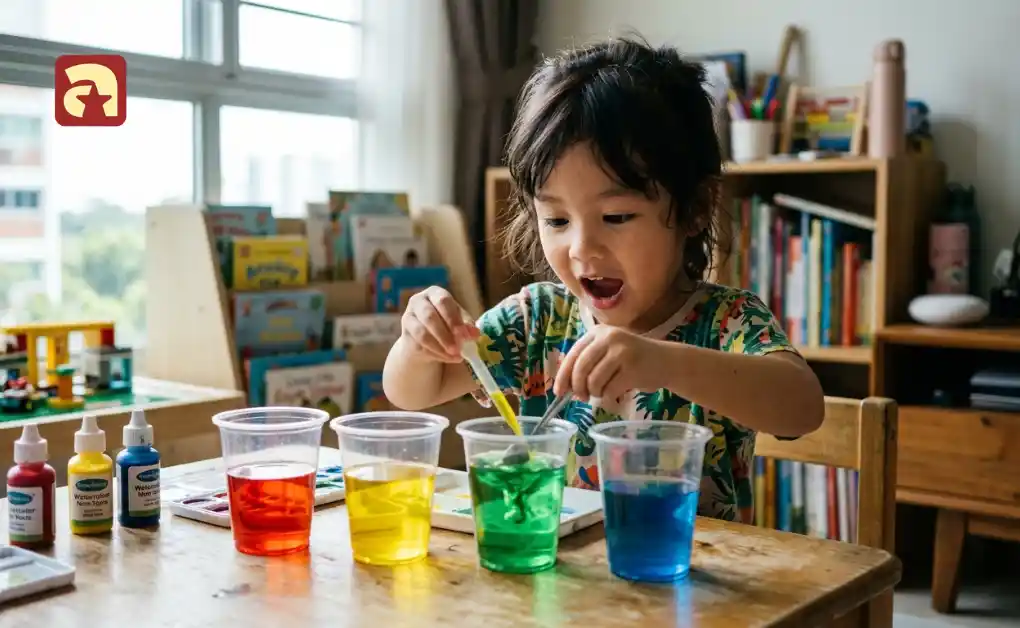
The experiment itself almost doesn’t matter. What matters is the question you ask before it starts. Getting a child to commit to a prediction before they see the answer is one of the best thinking habits you can build at this age. And the whole thing takes about ten minutes.
What you need
- Cups, bowls, or containers
- Water, food colouring, ice cubes, or small magnets
- Whatever you already have at home
How to play
Before you start anything, ask “What do you think will happen?” Then do it together and see. Mix two colours of water. Watch an ice cube melt in the sun. Test what a magnet picks up around the house. When the result surprises them, ask why they think it turned out that way. That conversation after the experiment is just as valuable as the experiment itself.
Activities like these help children develop critical thinking and early STEM skills. If your child enjoys simple science experiments, you may also like our guide to 10 STEM Activities for Preschoolers That Make Learning Fun.
9. Fix-It Play
There is something deeply satisfying about spotting what is wrong and putting it right. Children feel that too. Setting up a situation that is slightly broken and stepping back to watch them figure it out is one of those activities that looks simple but produces some genuinely impressive thinking.
What you need
- A toy or setup that has been deliberately broken
- A puzzle with a piece in the wrong spot
- A train track that does not connect or a tower that is lopsided
How to play
Present it casually. “Something is not quite right here. Can you figure out what it is?” Then stop talking. No pointing, no hinting, no looking meaningfully at the problem area. Just watch. When they find it, ask how they knew something was wrong before asking how they fixed it. Most children go straight to fixing things. Getting them to stop and notice first is actually the harder skill.
10. Role Play and Pretend Problem Scenarios
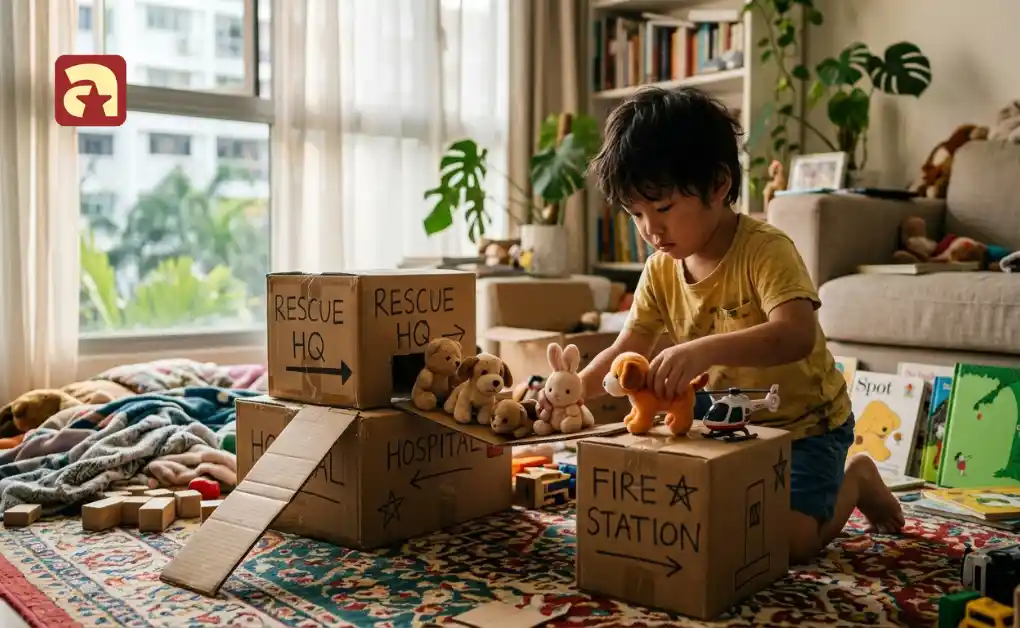
Creative problem-solving activities do not get better than this one. Give a child a problem inside a story, and they will throw everything they have at solving it. There is no pressure, no right answer, and no consequences if it goes wrong.
What you need
- Toys, stuffed animals, or action figures
- Simple props like cushions, boxes, or blankets
- Whatever is already lying around
How to play
Set up a scenario with a problem already baked in. The toy bus broke down, and everyone needs to get home. The teddy bear hospital ran out of bandages. The spaceship needs a repair, but the only materials available are cardboard and tape. Hand it over and let your child run it from there. The solutions they come up with on their own will surprise you.
Many preschool environments in Singapore are designed to build these same skills through guided exploration and hands-on learning. At Amazing Star, our Integrated Theme Program encourages children to think, question, and solve problems through real-world themes across science, language, and creative play.
How to Support Your Child Through Problem-Solving Without Taking Over
Knowing which activities to try is the easy part. The harder part is what you do while your child is in the middle of one. There is a big difference between support that builds confidence and support that quietly tells your child they cannot manage without you. If you are genuinely looking for ways to improve problem-solving skills in your child, it starts here more than anywhere else in this guide.
1. Ask Questions, Not Answers
This approach reflects the principles of inquiry-based learning, where children develop confidence by exploring solutions and testing their own ideas. Next time your child gets stuck, replace the urge to explain with a question instead. A genuinely open one, not a leading question that points them toward the answer.
- “What do you think is happening here?”
- “What have you tried so far?”
- “What would happen if you tried it a different way?”
These keep the thinking with your child instead of transferring it to you.
2. Let Them Struggle, Then Step In Smart
Watching your child get frustrated is uncomfortable, but a small amount of struggle is not something to protect them from. It is what builds the confidence to try harder things later.
If they fully shut down, acknowledge the feeling first. Not “you’re almost there.” Just “I can see this is really hard right now.” Once they have settled, break the task into smaller pieces. Not the whole puzzle, just one corner. Small wins rebuild the willingness to keep going.
3. Celebrate the Process, Not Just the Result
Try shifting the praise to the attempt itself. “I noticed you tried three different ways before it worked” lands differently than “well done, you got it.”
- “I saw how hard you were thinking just now”
- “You kept going even when it got difficult”
- “It did not work, but you figured out why; that is the important part”
Conclusion
Every time your child figures something out, whether it is matching a lid to the right container or deciding how to get teddy across the river, something real is happening in their brain. They are building the kind of thinking that no worksheet can teach.
The activities here are not about turning playtime into a lesson. They are about giving your child the right conditions to think, try, fail, and try again. What you do in those moments matters just as much as the activity itself. The questions you ask instead of the answers you give. The praise is saved for effort rather than outcome. The thirty seconds you wait before jumping in.
Start with one activity this week and see what happens. You might be surprised by what your child is already capable of.
If you’d like to see how this kind of learning looks in practice, you can book a school tour at Amazing Star and explore our classrooms and learning environment.
FAQs
How much time should I spend on problem-solving activities each day?
Ten to fifteen minutes is more than enough. Preschoolers learn better in short bursts than long sessions. A quick sorting game while unpacking groceries counts just as much as a planned activity.
My child always wants me to play with them. Should I sit with them or leave them to it?
Sit with them when introducing something new, then gradually step back as they get the hang of it. The goal is for them to feel comfortable trying things without needing you there to start.
Are problem-solving games for preschoolers worth buying?
Some are useful, but you do not need to spend much. Puzzles, magnetic tiles, and shape sorters do the job well. Once your child can complete something without thinking, it is time to move on to something harder.
Can watching educational shows help with problem-solving skills?
Some shows help, but screen time works best alongside hands-on play, not instead of it. A show that pauses and asks your child to answer before revealing the solution is far more useful than passive watching.
What if my child has a learning difference or developmental delay?
Most activities here can be adjusted to suit different learning needs. Start simpler than you think necessary and follow your child’s lead. For specific concerns, speak to their childcare teacher at their preschool in Singapore or a registered paediatrician.