
Shapes are everywhere. Preschoolers see circles in wheels, squares in windows, and triangles in slices of pizza long before they learn the names of those shapes. That is why early shape activities work best when children can explore, touch, build, and play while learning.
Shape recognition is one of the first important math skills preschoolers develop. It helps children notice patterns, understand space, improve problem-solving skills, and prepare for early reading and writing. Learning shapes does not need to feel like a lesson. Simple games and hands-on activities can make learning fun and natural.
In this guide, you will find easy shape activities for preschoolers that support early learning while keeping children active, curious, and engaged.
Why Shape Recognition Matters for Preschoolers
Shapes are part of a child’s everyday world. Children see them in toys, books, food, buildings, signs, and nature. Learning to recognise these shapes helps preschoolers make sense of the world around them.
Shape recognition also supports many important early learning skills, including:
- Visual memory
- Fine motor development
- Problem-solving
- Early math understanding
- Spatial awareness
- Creativity and imagination
Together, these skills prepare children for STEM education and lifelong learning.
When children notice that a clock is circular or a window is rectangular, they begin to connect learning to real-life experiences. These small discoveries strengthen observation and thinking skills over time.
Which Shapes Should Preschoolers Learn First?
Children learn shapes gradually at different stages of development, depending on their preschool age in Singapore. Some shapes are easier to understand because they appear often in daily life. Teaching step by step helps preschoolers feel confident and less overwhelmed.
Here is a simple guide parents and teachers can follow.
1. Nursery Program (3 – 4 Years, N1 & N2)
In a nursery programme, children begin recognising and naming basic shapes. At this age, they are becoming more aware of the world around them and start noticing shapes in familiar objects. For example, they may recognise that a clock is a circle, a window is a square, or a book is a rectangle.
Through Montessori materials, group activities, and creative play, children learn to identify shapes while developing their observation and problem-solving skills.
Shapes to Learn:
- Circle
- Square
- Triangle
- Rectangle
- Oval
Best Activities:
- Exploring Montessori sensorial materials
- Completing simple shape puzzles
- Colouring and drawing different shapes
- Making shapes with playdough
- Matching shapes during group activities
Learning Outcome:
Children begin recognising common shapes, matching them to everyday objects, and drawing simple shapes on their own. These early experiences also support the development of numeracy and fine motor skills.
2. Kinder Years Program (4 – 6 Years, K1 & K2)
As children move into the Kinder Years Programme, they become ready for more advanced shape concepts. They start learning about shapes with more sides and corners while also being introduced to basic 3D shapes.
Using Montessori geometry materials and hands-on activities, children explore shapes found in nature, buildings, and everyday objects. This hands-on approach supports kindergarten learning by helping children understand shape concepts in a meaningful and practical way.
Shapes to Learn:
- Star
- Heart
- Diamond
- Pentagon
- Hexagon
- Cube
- Sphere
- Cone
- Cylinder
Best Activities:
- Shape tracing and drawing activities
- Building with blocks and construction materials
- Creating 3D shapes using clay or playdough
- Shape-based movement and obstacle games
- Exploring flat and solid shapes using Montessori materials
- Identifying shapes found in nature and everyday surroundings
Learning Outcome:
Children learn to compare shapes, describe their features, and understand the difference between 2D and 3D shapes. These skills support their mathematical thinking and help prepare them for future learning.
Fun and Easy Shape Activities for Preschoolers
Children learn shapes best when it feels like play, not study. These fun shape activities make learning natural, active, and enjoyable while helping kids recognise and remember shapes with ease.
1. Shape Hunt Around the House
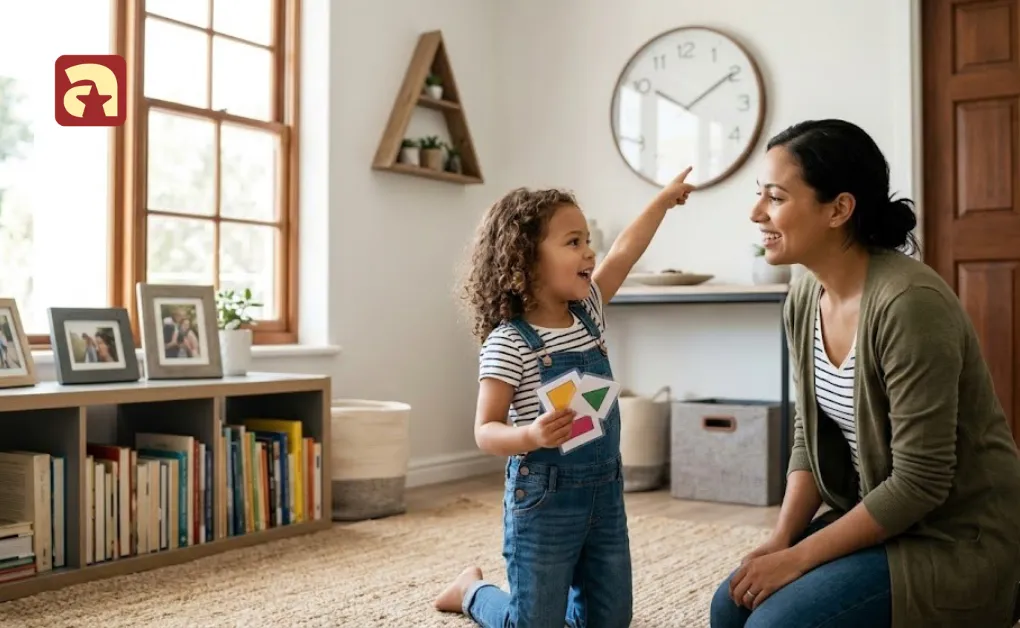
One of the simplest and most effective ways to teach shapes is by connecting them with everyday objects. Children explore their surroundings and discover shapes in things they already use, such as clocks, books, doors, and windows. This turns learning into a fun discovery activity instead of a formal lesson.
Skills children build: Shape recognition, observation skills, and real-world connection
2. Tape Shape Movement Game
This activity combines learning with physical movement, making it perfect for active young children. Create large shapes on the floor using tape and ask children to jump, hop, or walk to the shape you call out. It keeps learning energetically and engaging.
Skills children build: Listening skills, coordination, gross motor skills, and shape identification
3. Shape Matching Cards Game
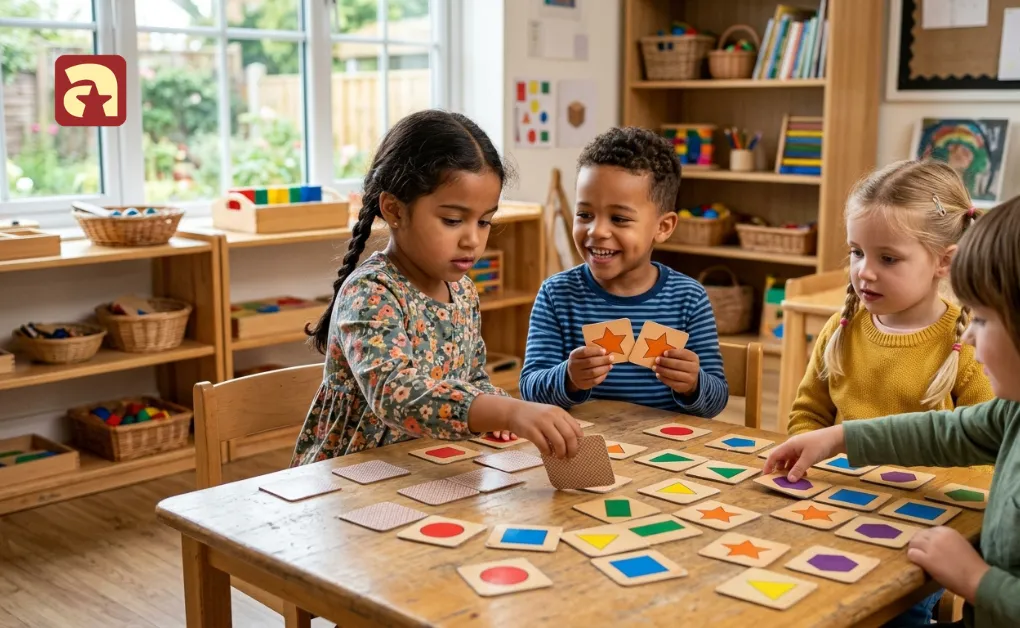
A simple memory-based game that helps children stay focused while learning. Place shape cards face down and let children flip them to find matching pairs. This improves both concentration and visual recognition in a playful way.
Skills children build: Memory, concentration, and visual recognition
4. Shape Dance Game
A movement and music-based learning activity that children enjoy instantly. Place different shapes on the floor and play music. When the music stops, call out a shape and ask children to stand on it. It makes learning active and exciting.
Skills children build: Quick thinking, listening skills, and shape recall
Hands-On Shape Learning Activities
Hands-on activities turn shape learning into real play. Children explore, create, and understand shapes naturally while having fun.
1. Playdough Shape Building
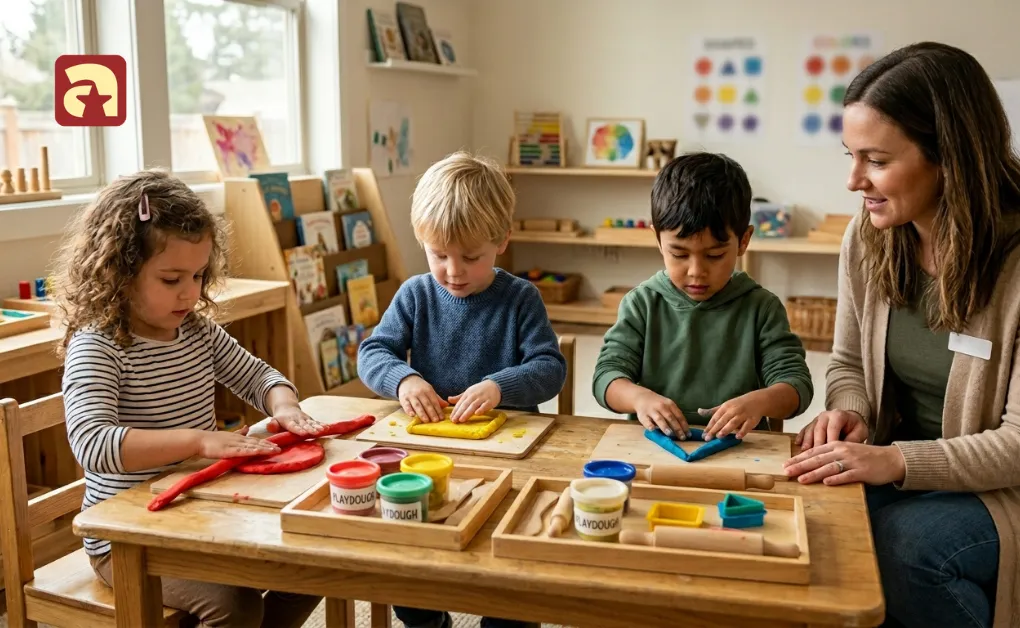
A creative hands-on activity where children form shapes using playdough. They can roll, flatten, and shape it into circles, squares, and triangles, making learning more sensory and fun.
Learning outcome: Improves fine motor skills, hand strength, and shape memory
2. Shape Sorting Activity
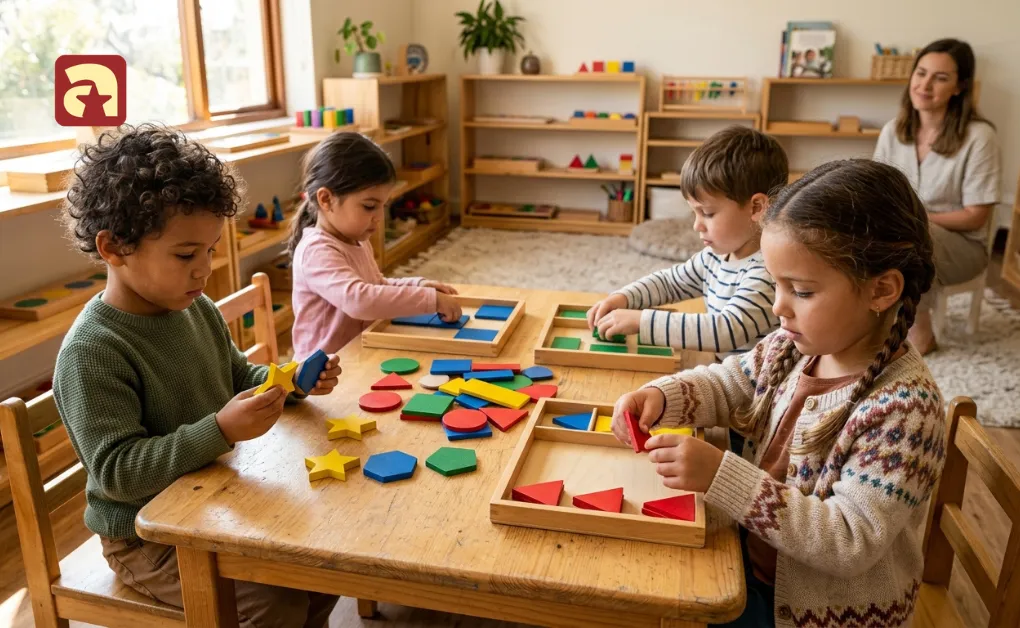
Children group different shapes into matching categories. This helps them notice how shapes are different from each other. Mix different shapes together, sort them into the correct groups, and name each shape during sorting.
Learning outcome: Builds focus, categorising skills, and visual recognition
3. Shape Collage Craft
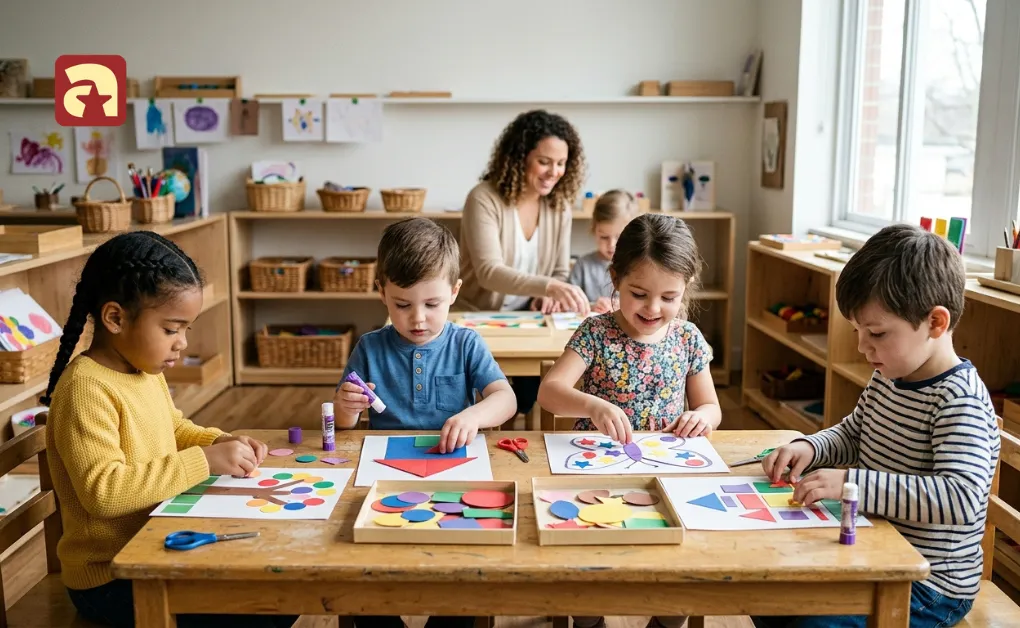
Children use cut-out shapes to create pictures like houses, trees, or animals. It helps them see how shapes can be used to form real objects. They arrange paper shapes to create a picture, stick them on paper using glue, and build simple designs creatively. This makes it one of the best open-ended art activities for young children.
Learning outcome: Enhances creativity, shape awareness, and hand coordination
4. Shape Stamping Activity
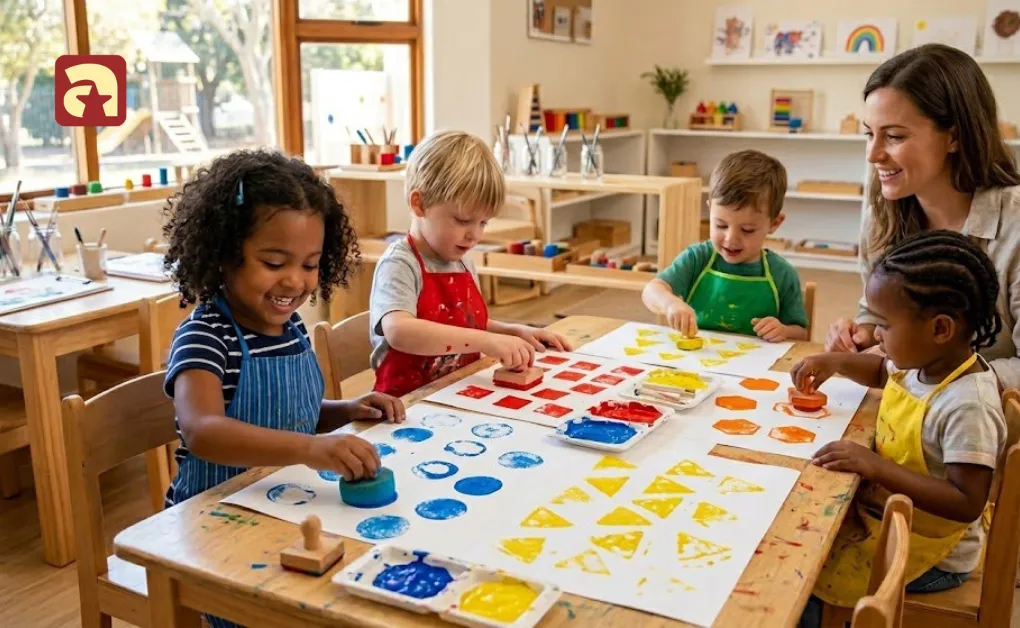
Children use paint and shape stamps to create fun patterns. This makes shape learning creative and enjoyable. They dip stamps into paint, press them on paper, and create repeated shape patterns.
Learning outcome: Improves creativity, hand control, and shape recall
5. 3D Shape Building with Blocks
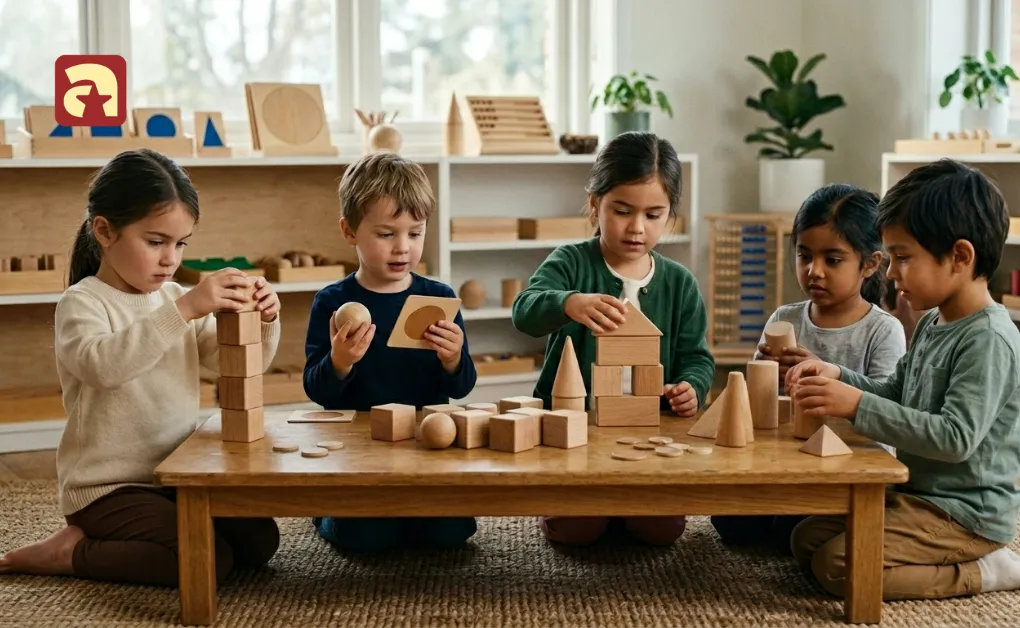
Older children in the Kinder Years Program can explore solid shapes by building with blocks, sorting 3D objects, and comparing them with flat shapes. This introduces early geometry in a hands-on, playful way.
Learning outcome: Builds spatial awareness, problem-solving, and understanding of 3D shapes
Easy Tips for Teaching Shapes to Young Children
Teaching shapes becomes easier when learning feels relaxed and playful. Here are a few helpful tips:
- Use shapes during daily routines, point them out in food, signs, and furniture
- Repeat shape names often in a natural, conversational way
- Keep activities short and fun, especially for younger children
- Let children explore at their own pace
- Use colourful and hands-on materials
- Celebrate little progress to build confidence
Children learn best when they feel curious, confident, and supported.
Conclusion
Shapes are part of a child’s everyday world, and that makes learning them both simple and meaningful. From clocks and windows to toys and food, children naturally encounter shapes in everything around them.
With the right activities, shape learning does not need to feel like a lesson. It becomes a fun and active experience through play, movement, and creativity. These small, everyday interactions help children build strong observation skills, early math understanding, and confidence in learning.
If you are looking for a preschool where your child can explore shape learning through hands-on Montessori activities, visit us at Preschool Bukit Panjang, Preschool Choa Chu Kang, or Preschool Yishun and give your child the strong start they deserve.
FAQs
1. At what age should children start learning shapes?
Most children start recognising basic shapes between the ages of 2 and 3. At this stage, they learn through play, observation, and everyday objects around them. Early exposure helps them build strong visual understanding. Formal learning becomes easier once they are familiar with shapes in real life.
2. Which shape is easiest for preschoolers to learn first?
Circles are usually the easiest shape for preschoolers to learn. They see them often in real-life objects like balls, plates, clocks, and wheels. Because of this familiarity, children quickly recognise and remember circles. It becomes a natural starting point for shape learning.
3. How long should shape activities last?
Shape activities should last around 10–20 minutes. Preschoolers have short attention spans, so shorter sessions keep them engaged. Repeating activities regularly works better than long sessions. This keeps learning fun and effective.
4. Can shape activities improve writing skills?
Yes, shape activities can support early writing development. Tracing, drawing, and building shapes help improve hand strength and control. These skills are important for holding a pencil and forming letters. Over time, children become more confident with writing tasks.
5. Are worksheets enough for teaching shapes?
Worksheets alone are not enough to teach shapes. Preschoolers learn better through hands-on activities like play, blocks, drawing, and real objects. These methods help them understand shapes more clearly. Worksheets should only be used as a support tool, not the main method.